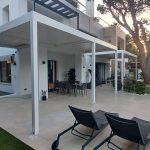
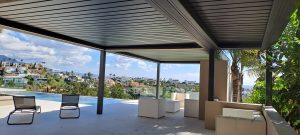
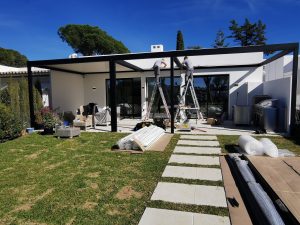
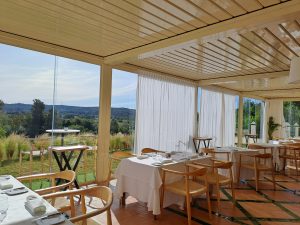
A bioclimatic pergola can be an excellent addition to a villa, penthouse, garden or commercial terrace. But is it always worth the investment?
Not necessarily.
Although bioclimatic pergolas offer adjustable shading, natural ventilation and an architectural aluminium structure, the right choice depends on how you intend to use your outdoor space.
For some properties, the flexibility of adjustable louvres makes a significant difference. For others, a retractable fabric roof or fixed-panel pergola may provide a more suitable solution.
At Pérgolas Sunset, we work with different aluminium pergola systems for residential and commercial projects, particularly across the Costa del Sol. Rather than recommending the same product for every terrace, we consider its intended use, location, technical requirements and the client’s priorities.
This guide explains when investing in a bioclimatic pergola makes sense, when it may not be necessary and what you should check before making a decision.
1. When is a bioclimatic pergola worth the investment?
A bioclimatic pergola is particularly worth considering when you want more control over sunlight and ventilation without permanently covering your outdoor space with a fixed roof.
When you want adjustable shade and natural ventilation
The main advantage of a bioclimatic pergola is its adjustable louvred roof.
By changing the position of the louvres, you can regulate the amount of sunlight entering the terrace and encourage airflow when conditions allow.
This can be especially useful for south- or west-facing terraces, where solar exposure changes throughout the day.
However, the actual result depends on the orientation of the property, surrounding buildings, wind conditions and the pergola’s configuration.
When you use your terrace regularly
If your outdoor space is an important part of everyday life, investing in a well-designed pergola may make more sense than purchasing a temporary shading solution.
For example, a villa owner may want a shaded dining area next to the living room, while a penthouse owner may be looking for a comfortable lounge area with views.
Restaurants, cafés and hotels may have different requirements, including customer circulation, furniture arrangements and operational needs.
In each case, the pergola should support the way the space is used rather than simply cover the largest possible area.
When architectural integration matters
A bioclimatic pergola can become a defined architectural feature of a property.
Aluminium structures can be designed in attached or freestanding configurations, depending on the model and the technical conditions of the installation.
Dimensions, finishes, post positions and drainage should all be considered as part of the overall design.
If you are planning a new property or a substantial renovation, it is worth considering the pergola before construction work is completed.
2. When might a bioclimatic pergola not be the best choice?
A bioclimatic pergola is not automatically the most suitable solution for every outdoor space.
Understanding when another system may be preferable can help you avoid investing in features you do not actually need.
When you only need occasional shade
If your main objective is to create shade for a few hours a day while keeping the terrace open at other times, a retractable fabric roof may be worth considering.
Retractable systems allow the roof covering to be withdrawn when it is not needed.
The most appropriate option will depend on the dimensions, exposure and intended use of the space.
When you prefer a permanently covered area
If you do not need adjustable louvres and would rather have a fixed roof, an aluminium pergola with fixed panels may be more appropriate.
Ventilation, solar exposure, roof drainage and the characteristics of the covering material must still be assessed.
When the property presents technical limitations
Some terraces require more detailed consideration before a pergola can be recommended.
A high-rise penthouse exposed to strong winds, a property with restricted fixing points or a terrace with difficult installation access may require a specific structural solution.
The feasibility of a project cannot be determined from dimensions alone.
When the additional features do not match your priorities
Adjustable louvres can be valuable, but not every customer needs them.
If your requirements can be met by a different aluminium roof system, it is sensible to compare the available alternatives before deciding.
You can explore this further in our guide to affordable alternatives to bioclimatic pergolas in Marbella, Estepona and Mijas.
3. Bioclimatic, retractable or fixed roof: which makes more sense?
The following comparison can help identify which system deserves closer consideration.
| Your main priority | System to consider | Important factor |
|---|---|---|
| Adjustable sunlight and ventilation | Bioclimatic pergola | Louvre orientation and configuration |
| A roof that can be retracted | Retractable fabric pergola | Opening range and fabric characteristics |
| A permanently covered area | Fixed-panel pergola | Ventilation and drainage |
| Outdoor dining and entertaining | Depends on the project | Layout, furniture and solar exposure |
| Future glass enclosures | Compatible pergola structure | Technical feasibility and fixing requirements |
| Installation with limited supports | Project-specific solution | Structural assessment and anchoring |
This table is intended as a starting point rather than a final recommendation.
The best pergola is the one that meets your requirements within the technical conditions of your property.
4. Is a bioclimatic pergola worth it for a villa on the Costa del Sol?
For villa owners in Marbella, Estepona, Mijas and surrounding areas, outdoor living is often an important part of the property.
A pergola may help define a dining area, provide shade beside a swimming pool or create a transition between indoor and outdoor spaces.
A bioclimatic system can be particularly interesting when adjustable shading and ventilation are priorities.
However, there are several factors to consider.
Orientation: A terrace exposed to afternoon sun may require a different configuration from a shaded courtyard.
Connection with the house: The position of the pergola should consider doors, windows, façades and drainage.
Furniture and circulation: The structure should accommodate the intended dining or lounge arrangement without obstructing movement.
Future additions: Lighting, vertical ZIP screens or glass enclosures should be considered early if they may form part of the project.
A pergola should be planned as part of the outdoor living space, not as an isolated structure.
5. What about a penthouse terrace?
Penthouse projects can present requirements that are significantly different from those of ground-level gardens.
Wind exposure, available anchoring points, access restrictions and the characteristics of the existing building may influence the choice of pergola.
A system that works well in a sheltered garden may not be appropriate for an exposed rooftop without further technical assessment.
It is also important to consider how the structure will affect circulation, views and the usable area of the terrace.
In some cases, the desired dimensions or configuration may need to be adjusted to meet the technical requirements of the installation.
For a penthouse, structural feasibility should be assessed before choosing a pergola based solely on appearance or price.
6. Is a bioclimatic pergola worth considering if you want glass enclosures?
Some bioclimatic pergolas can be combined with compatible sliding or folding glass systems.
This may provide additional protection from wind and rain while preserving a visual connection with the outdoors.
However, a glazed pergola should not automatically be considered an insulated indoor room.
Before planning glass enclosures, it is important to check:
- Compatibility between the pergola and the glazing system.
- Structural requirements and fixing points.
- Ventilation and access.
- Drainage and weather exposure.
- Any planning permissions or community requirements that may apply.
If you intend to add glazing later, it is preferable to consider that possibility during the initial design.
A structure designed without future enclosures in mind may not be suitable for them without modifications.
7. Why do bioclimatic pergola prices vary so much?
When comparing quotations, customers sometimes find substantial differences between pergolas that appear similar in photographs.
However, the price may reflect differences in structural profiles, dimensions, louvre systems, motorisation, drainage, finishes and available accessories.
The scope of the service also matters.
A supply-only quotation cannot be compared directly with a proposal that includes transportation, installation and the requirements of a specific property.
It is therefore important to understand what is included, what remains provisional and which elements may require further assessment.
For a more detailed explanation, read why bioclimatic pergola prices differ.
8. What should you check before requesting a quotation?
Before approaching a pergola supplier, it is helpful to establish the basic requirements of your project.
Consider the following:
- Location: Where is the property, and what are the surrounding conditions?
- Dimensions: What approximate width, projection and height are available?
- Configuration: Do you prefer an attached or freestanding pergola?
- Intended use: Dining, relaxing, poolside seating or commercial activity?
- Exposure: How does sunlight and wind affect the terrace?
- Accessories: Would you like integrated lighting, ZIP screens or future glazing?
- Timing: When are you hoping to carry out the installation?
- Supporting information: Do you have photographs, plans or measurements?
These details can help establish an initial proposal, although some technical aspects may need to be confirmed during a site assessment.
Considering a pergola for your property?
You may already have a bioclimatic pergola in mind, or you may still be comparing different roof systems.
At Pérgolas Sunset, we can help assess which aluminium pergola configuration may be appropriate for your terrace, taking into account its intended use and installation conditions.
Contact our team to discuss your project. Sharing approximate dimensions, photographs and the property’s location is a useful starting point.
9. Common mistakes when choosing a bioclimatic pergola
A well-informed decision requires more than comparing prices or selecting a design from a photograph.
Common mistakes include:
- Choosing a bioclimatic system without considering whether adjustable louvres are necessary.
- Comparing quotations that include different products or services.
- Overlooking wind exposure and anchoring requirements.
- Ignoring how posts may affect furniture placement and circulation.
- Assuming that an outdoor roof will be completely watertight in all weather conditions.
- Planning future glass enclosures without checking structural compatibility.
- Treating a preliminary quotation as a final technical specification.
These considerations are especially important when a pergola is being incorporated into an existing property.
Taking time to define the project can reduce uncertainty before ordering and installation.
Frequently asked questions
Is a bioclimatic pergola worth the money?
It can be, particularly when you value adjustable shade, natural ventilation and an integrated aluminium structure. Whether the investment makes sense depends on your requirements, the property and the alternatives available.
Is a bioclimatic pergola better than a retractable roof?
Not necessarily. Bioclimatic pergolas allow you to adjust the louvres, while retractable fabric systems allow the covering to be withdrawn. Each offers different benefits.
Is a bioclimatic pergola suitable for a penthouse?
It may be suitable, subject to wind exposure, structural requirements, anchoring and installation access. A technical assessment is particularly important for elevated terraces.
Can a bioclimatic pergola be enclosed with glass?
Some models can accommodate compatible glazing systems. The feasibility should be assessed before installation, particularly if glazing is planned for a later stage.
Does a bioclimatic pergola make a terrace usable all year round?
It can extend the opportunities to use an outdoor space, but comfort depends on the weather, exposure and configuration. It does not automatically provide the conditions of an indoor room.
Is a bioclimatic pergola suitable for restaurants and hotels?
It can be suitable for certain commercial terraces, provided the structure and layout meet the operational and technical requirements of the establishment.
Should I choose the pergola before planning the furniture?
Ideally, the pergola and furniture layout should be considered together. Post positions, circulation routes and the intended use of the terrace influence the appropriate dimensions.
Conclusion: choose a pergola that suits your property, not just your preferences
A bioclimatic pergola can be a worthwhile investment when its adjustable louvres, aluminium structure and design possibilities respond to the way you want to use your outdoor space.
But the decision should not be based on appearance or general product claims alone.
For some properties, a retractable or fixed-panel roof may be more appropriate. For others, the technical conditions of the building may determine which solutions are feasible.
At Pérgolas Sunset, we work with different aluminium pergola systems and assess each project according to its dimensions, location, intended use and installation requirements.
Request a personalised assessment of your project. Send us your approximate measurements, photographs and location so that we can consider the most suitable options for your outdoor space.
Also available in Spanish: ¿Merece la pena instalar una pérgola bioclimática? Cuándo elegirla y cuándo considerar otras alternativas.