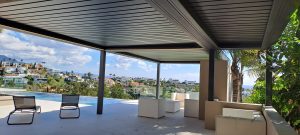
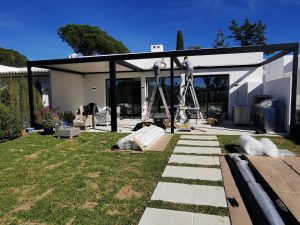
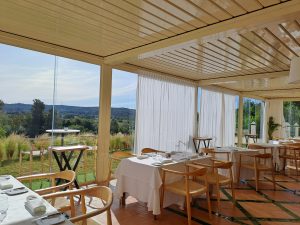
Expand Your Outdoor Space with Confidence, Even in Winter
Installing a pergola is a decision that transforms any home, offering the possibility of enjoying the outdoors all year round. However, in continental climates like Castilla y León, where winters are harsh with frosts, snow, and intense thermal changes, the choice of structure requires special attention. This article, based on our experience at Pérgolas Sunset, will guide you to avoid the most common mistakes and ensure your investment is durable, functional, and aesthetically perfect.
Our goal is to provide you with the necessary knowledge to make informed decisions, whether you are a homeowner, architect, builder, interior designer, or landscape designer. We want your pergola not only to withstand adverse weather conditions but also to become a useful and comfortable space in any season, intelligently and efficiently connecting your home with nature. Although we focus on the specificities of cold regions, many of the criteria explained here are equally relevant for outdoor protection on the Costa del Sol, where salinity, coastal winds, and intense sun exposure present unique challenges for exposed terraces and penthouses.
The Most Common Mistakes When Choosing a Pergola in Cold Climates
Choosing a pergola for areas with demanding winters goes beyond aesthetics. It involves a deep analysis of materials, structural resistance, and adaptability to extreme climatic conditions. Below, we detail the most frequent mistakes and how Pérgolas Sunset addresses each of them.
1. Choosing Materials Vulnerable to Low Temperatures
Low temperatures, frosts, and thaw cycles can significantly affect the integrity of certain materials. Some can expand, contract, or deteriorate over time, compromising the stability and lifespan of the pergola.
Why is aluminium the superior choice in cold climates?
Lacquered aluminium stands out for its exceptional thermal stability, resistance to humidity and frosts, and minimal maintenance. At Pérgolas Sunset, we work exclusively with aluminium structures designed to withstand both the warmest summers and the most demanding winters. Its durability and corrosion resistance make it the ideal material to protect your long-term investment. This resistance also makes it suitable for coastal environments, where salinity and humidity are factors to consider.
2. Underestimating the Weight of Snow and Accumulated Rain
In cold regions, the pergola roof must be designed to support significant additional loads, such as the weight of accumulated snow or large volumes of rain. An inadequate structural design or an inefficient water drainage system can lead to serious problems, from deformation to collapse.
An effective rainwater drainage system is essential to prevent water accumulation and protect the structure and the space below. However, rainwater drainage should not be confused with the ability to withstand or remove accumulated snow. In areas exposed to snowfall, the pergola’s structural capacity must be assessed according to the specific model, local climatic conditions, and installation requirements. On the Costa del Sol, appropriate drainage is equally important when dealing with periods of heavy rainfall.
3. Ignoring Humidity and Condensation
Beyond rain and wind, humidity and condensation are critical factors in cold climates that can affect comfort and durability. Poor management of these elements can generate unhealthy environments or damage to materials and enclosures.
A well-designed pergola must consider ventilation, orientation, and drainage systems to prevent condensation. At Pérgolas Sunset, we analyse each project to ensure optimal airflow and the choice of enclosures that maintain a dry and comfortable environment all year round. Discover how to enjoy your pergola all year round. The management of humidity is equally important in coastal areas, where the sea breeze can intensify the sensation of humidity.
4. Believing that Bioclimatic Pergolas Cannot Withstand Snow or Ice
Bioclimatic pergolas are not necessarily unsuitable for regions experiencing snow or freezing temperatures. However, their suitability depends on the technical specifications of each model, including its structural resistance, the expected snow loads, and the conditions of the installation site.
During freezing conditions, motorised louvres should not be operated if ice may obstruct their movement. It is important to follow the manufacturer’s operating and maintenance instructions and verify the pergola’s suitability for the specific project. At Pérgolas Sunset, we assess these factors when recommending a solution for properties in Castilla y León and other areas with demanding winter conditions. Learn more about what a bioclimatic pergola is.
5. Failing to Plan for Year-Round Pergola Use
A pergola is an investment to be enjoyed in all seasons. Failing to plan for its use during winter is a mistake that limits its potential. With the right combination of structure, enclosures, and lateral protection, your outdoor space can be transformed into a cosy retreat even on the coldest days.
Glass enclosures, vertical blinds, or heating systems can turn your pergola into a reading area, a protected outdoor dining room, a family gathering space, or a multifunctional area throughout the year. Imagine enjoying outdoor family gatherings, meals with friends, or simply a moment of relaxation in your garden or on your terrace, protected from the cold or intense sun. A bioclimatic pergola expands your living space, offering comfort all year round. Explore our guide to bioclimatic pergolas and enclosures.
6. Prioritising Aesthetics Over Functionality
While aesthetics are important, in cold regions they must go hand in hand with rigorous technical and functional analysis. A visually attractive pergola may not be the most suitable solution if factors such as water load, snow accumulation, the structural behaviour of the roof, or protection against cold and wind have not been considered.
Each project is unique and must be analysed individually, taking into account the climate, orientation, and intended use of the space. At Pérgolas Sunset, we help you find the perfect balance between design and functionality, ensuring your pergola is as beautiful as it is resistant. This is especially true when installing a pergola in a villa, where architectural integration is key.
What to Consider Before Installing a Pergola in Cold Climates
Before making a decision, consider these key points to ensure the success of your project:
•Aluminium Quality: Ensure the material is high-quality and treated to withstand extreme weather conditions, including salinity in coastal areas.
•Structural Resistance: Verify that the pergola is designed to support the weight of snow, wind force (both inland and coastal), and other inclement weather typical of the area.
•Drainage and Evacuation System: A good system is crucial to prevent problems with water and snow accumulation, as well as to effectively manage heavy rains.
The Importance of Choosing Specialists: Experience and Adaptation
Every climate and every space requires specific solutions. At Pérgolas Sunset, we understand that no two projects are alike. Our experience on the Costa del Sol and in inland areas like Castilla y León allows us to adapt each installation to the climatic conditions, orientation, and actual use of the space.
We work with custom aluminium structures, which allows us to perfectly integrate the pergola into your home’s architecture, optimising natural light and protecting you from wind and rain. Our goal is to create a space that you use and enjoy all year round, with the peace of mind of knowing you have the support of professionals. Learn more about our custom aluminium structures.
Do You Need Personalised Advice for Your Pergola Project?
We understand that every project is unique and that specific questions may arise regarding materials, design, installation, or how to adapt a pergola to the climatic conditions of your area, whether in Castilla y León or on the Costa del Sol. At Pérgolas Sunset, we are here to help you evaluate alternatives, resolve your concerns, and better understand how a bioclimatic pergola can transform your outdoor space.
Frequently Asked Questions About Pergolas in Cold Climates
Are all pergolas suitable for cold climates?
Is it advisable to install enclosures in cold climates?
Yes, glass enclosures or vertical blinds significantly improve thermal comfort and allow for greater use of the space in winter. This is fundamental for enjoying a pergola all year round.
How does snow affect a pergola?
Snow can exert considerable weight. It is vital that the pergola has adequate structural resistance and an efficient evacuation system to prevent dangerous accumulations. Planning is key, as detailed in What Is a Bioclimatic Pergola.
Does the orientation of the home influence the choice of pergola?
What materials are most recommended for pergolas in cold climates?
Lacquered aluminium is one of the best options due to its corrosion resistance, durability, thermal stability, and low maintenance. Its versatility allows its use in any climate, from Castilla y León to the Costa del Sol.
Can a bioclimatic pergola be used all year round in cold climates?
Yes, provided the design, structure, and enclosures have been correctly planned for the specific climatic conditions and intended use. The goal is to enjoy a pergola all year round.
Do I need permits to install a pergola in my garden or on my terrace?
How long does it take to install a bioclimatic pergola?
Installation time depends on the complexity of the project and the size of the pergola, but a professional team can complete it in a few days, minimising disruption. Installation efficiency is an important factor when comparing pergola quotes.
Your Investment in Comfort, Durability, and Lifestyle
Choosing a pergola in cold regions like Castilla y León, or in challenging environments such as the Costa del Sol, requires well-founded technical decisions and a clear vision of the lifestyle you wish to create. Aluminium, due to its stability and durability, stands as the preferred material, guaranteeing a structure that will withstand the test of time and adverse weather conditions. An adequate design, considering orientation, drainage, and the possibility of enclosures, will allow you to enjoy your outdoor space all year round, transforming it into a functional and welcoming extension of your home.
At Pérgolas Sunset, our vast experience in real projects, both inland and on the coast, allows us to understand the particularities of each location. We study every detail to offer you a personalised solution that not only meets your expectations but exceeds them, ensuring that your investment translates into comfort, safety, and added value to your property. Correct planning is key to avoiding mistakes and ensuring your pergola becomes that dreamed-of outdoor oasis, whether for family gatherings, outdoor dining, or simply relaxing by your pool or in your garden.
If you are considering installing a pergola and would like expert advice to create a functional, safe, and attractive outdoor space in any season, we invite you to contact Pérgolas Sunset. We will help you turn your vision into reality, creating a space that invites you to live the outdoors to the fullest.
You may also be interested in: