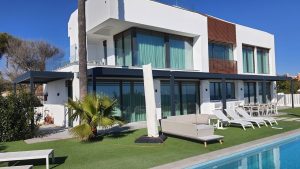
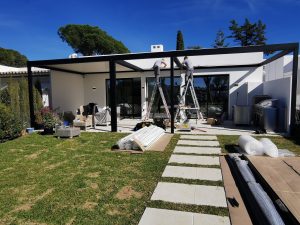
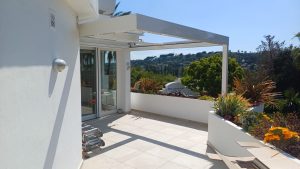
The entrance to your home is more than somewhere to park a car. It is where you arrive after work, unload shopping, welcome visitors and move between the street and your front door.
A pergola for a driveway or home entrance can do much more than provide shade for a vehicle. When thoughtfully designed, it can improve everyday access, complement the façade and make better use of an outdoor area that might otherwise serve only as parking.
For villas, townhouses and detached homes on the Costa del Sol, protection from intense sunlight may be the main priority. In Castilla y León, rain and colder weather may also influence the choice of structure.
However, the starting point should be the same: what do you want the space to do, beyond covering your car?
At Pérgolas Sunset, we assess aluminium pergolas, fixed-roof structures and bespoke solutions according to the property, its surroundings and the intended use.
This guide explains how to plan a driveway pergola, compare different carport options and consider the practical details before requesting a quotation.
1. Why Consider a Pergola for Your Driveway or Home Entrance?
A covered parking space can improve several aspects of everyday life.
Protect Your Vehicle from Direct Sunlight
On the Costa del Sol, vehicles parked outdoors may be exposed to strong sunlight for several hours a day.
A suitable roof can reduce direct sun exposure and help limit heat build-up inside the vehicle.
The level of protection will depend on the roof system, its position and the surrounding conditions.
Make Arriving Home More Comfortable
Think about the moments when you need to unload shopping, take luggage out of the boot or help children out of the car.
A well-positioned pergola can make these activities more comfortable.
However, covering the parking space does not automatically create a sheltered route to the front door. That connection needs to be considered as part of the design.
Improve the Appearance of Your Property
A pergola can become part of the home’s architectural composition.
Its proportions, colour, roof design and supporting posts should work with the façade rather than compete with it.
This is particularly relevant when the parking area is visible from the street.
Make Better Use of the Entrance
When the vehicle is away, the covered area may be useful for bicycles, unloading equipment or other temporary activities.
The entrance becomes a more flexible space without losing its primary parking function.
2. Driveway Pergola, Carport or Covered Parking: What’s the Difference?
The terms driveway pergola, carport, covered parking and entrance pergola are often used interchangeably.
They describe related solutions, but the design priorities can differ.
A carport is generally an open-sided structure designed primarily to provide overhead protection for vehicles.
A pergola for a home entrance may serve the same purpose while also addressing the relationship between the parking area, pedestrian access and the architecture of the property.
For example, an integrated entrance pergola may need to accommodate:
- Vehicle parking and manoeuvring.
- Comfortable pedestrian circulation.
- Access to the front door.
- Opening car doors and the boot.
- Lighting and drainage.
- Architectural proportions and finishes.
- Potential future changes to the parking area.
The most suitable solution is not determined by its name alone. It depends on how the space needs to function.
3. Plan the Layout Before Choosing the Structure
Before comparing pergola models, consider the dimensions and practical requirements of the entrance.
Vehicle Dimensions and Manoeuvring Space
The roof should not be planned solely around the length and width of the car.
You should also allow for:
- Opening the doors comfortably.
- Accessing the boot.
- Walking around the vehicle.
- Entering and leaving the parking space.
- Existing gates and pedestrian entrances.
- The possibility of changing to a larger vehicle.
The position of supporting posts can be just as important as the overall dimensions.
A post placed too close to a door-opening area may make everyday parking inconvenient.
One Vehicle or Two?
A structure covering one vehicle has different requirements from a double carport.
For wider parking areas, the design may involve additional supports or several connected modules.
It should not be assumed that a wide roof can always be built without intermediate posts.
Structural feasibility depends on the system, dimensions, loads and fixing conditions.
Attached or Freestanding?
An attached pergola may create a stronger visual connection with the house, provided the façade offers suitable fixing conditions.
A freestanding structure may be preferable where attaching to the building is not appropriate.
Both options require assessment of the available space, structural support, drainage and local conditions.
4. Integrate the Pergola with Your Home’s Architecture
The entrance is often one of the first parts of a property that visitors see.
A thoughtfully integrated pergola can improve its visual organisation and perceived quality.
Respect the Façade
Consider the height and proportions of the structure in relation to doors, windows, walls, rooflines and other architectural features.
The aim is to create a coherent design, not simply to fit the largest possible cover into the available space.
Coordinate Colours and Finishes
Aluminium pergolas can be specified in finishes that complement existing windows, entrance gates and exterior carpentry.
A matching colour may work well, but a carefully chosen contrast can also be effective.
Think About the Whole Property
For larger homes, the driveway may form part of a wider outdoor project involving a porch, garden, swimming pool or several pergolas.
Our guide to planning pergolas for villas explores how different outdoor areas can be considered together.
New Build or Existing Home?
A pergola incorporated during the design of a new property can be coordinated with paving, levels, drainage and electrical installations.
For an existing home, the design must respond to the conditions already in place.
Both approaches can produce a successful result, but they involve different planning considerations.
5. Which Pergola System Is Best for a Driveway or Carport?
There is no single roof system that is ideal for every parking area.
The choice depends on the intended use, orientation, exposure, architectural requirements and budget.
Fixed Panelled Aluminium Pergolas
A fixed panelled pergola may be particularly suitable when the main objective is to create permanent overhead coverage.
It can be worth considering for an open garage, driveway or parking area where adjustable roof louvres are not essential.
Roof configuration, drainage and structural support must be assessed for the individual project.
Bioclimatic Pergolas
Bioclimatic pergolas incorporate adjustable louvres that regulate the amount of sunlight entering the covered area.
They may be attractive when the entrance is also used as a multifunctional outdoor space.
However, a bioclimatic system is not automatically the best choice for covering a vehicle.
If the main requirement is a fixed roof, another system may be more appropriate.
Read What Is a Bioclimatic Pergola? to understand how adjustable-louvre systems work.
Bespoke Aluminium Structures
Some properties have unusual dimensions, irregular walls, restricted access or particular architectural requirements.
A bespoke structure may offer more flexibility than a standard configuration, subject to technical assessment.
Our article on custom aluminium structures explores how made-to-measure solutions can be integrated into different residential spaces.
What About Other Roof Systems?
The most expensive or technologically advanced pergola is not necessarily the most suitable.
The choice should reflect what you actually need from the covered area.
For a broader comparison, see Bioclimatic Pergolas vs Other Pergola Systems.
Considering a Pergola for Your Driveway?
Before choosing a model, it is worth assessing how the structure will work with your vehicle, entrance and home.
At Pérgolas Sunset, we can review the available space and discuss which aluminium pergola or carport configuration may be suitable.
Contact our team with photographs, approximate dimensions, your property’s location and the number of vehicles you would like to cover.
This information will help us carry out an initial assessment, subject to the necessary technical checks.
6. Technical Considerations Before Installation
A driveway pergola needs more than an attractive roof.
Its performance and everyday usability depend on several practical factors.
Sun Orientation
The sun’s position determines where shade will fall during different parts of the day.
A roof may provide good overhead protection while allowing low-angle sunlight to reach the vehicle from the side.
The orientation and required level of shade should therefore be considered before deciding on dimensions.
Wind Exposure
A sheltered townhouse entrance may experience different wind conditions from an open or elevated villa driveway.
The location, roof system, supporting posts and fixings all influence what can be installed.
For properties in exposed coastal areas, read Common Pergola Mistakes in Windy Coastal Areas.
Fixings and Structural Support
Existing paving does not necessarily indicate what lies beneath it.
The suitability of the ground, foundations, façade and possible fixing points must be assessed.
A pergola without front posts should never be assumed feasible without specific structural evaluation.
Rainwater Drainage
Water management is particularly important near a home’s main entrance.
Depending on the pergola system, rainwater may be collected through channels and directed through the supporting posts.
The final discharge point must be considered to avoid creating problems near doorways, pedestrian routes or existing drainage.
Installation Access
A finished property may have restricted access, delicate paving, landscaping, gates or nearby glass surfaces.
Transporting long aluminium profiles and positioning structural components can require specific logistical planning.
Additional lifting equipment may also be necessary, depending on the project.
Permissions and Community Requirements
Municipal planning rules, development restrictions and community regulations can affect the installation.
Requirements may depend on the property’s location, the structure’s dimensions and its position within the plot.
These questions should be checked before the project is finalised.
7. Costa del Sol and Castilla y León: Different Priorities
Pérgolas Sunset works on residential projects in both southern Spain and Castilla y León.
Although the same aluminium pergola systems may be considered in different regions, the design priorities can vary.
Driveway Pergolas on the Costa del Sol
In Marbella, Estepona, Mijas, Benahavís and surrounding areas, reducing direct sun exposure is often a central requirement.
Coastal conditions may also make wind exposure, finishes and maintenance particularly important.
An open driveway near the sea may need a different assessment from a sheltered entrance within a residential development.
Covered Parking in Castilla y León
In Valladolid, León, Salamanca and other inland areas, colder temperatures and winter weather may influence the choice of covering.
Rain, frost, snow and wind should be considered in relation to the actual site’s conditions and the technical specifications of the proposed structure.
No roof system should be assumed to offer complete protection against every weather event.
The right solution starts with the property, not just the region.
8. Think About Future Needs Before Installation
The way you use your driveway may change over time.
Planning ahead can help avoid unnecessary limitations later.
Lighting
Integrated or separate lighting may improve visibility when parking and walking towards the front door after dark.
Electrical requirements should be considered during the design stage.
Electric Vehicle Charging
If you already own an electric vehicle or expect to install a charging point, consider the position of the charger, cable routes and access around the vehicle.
Electrical work must comply with the applicable requirements.
A conventional pergola does not automatically include solar generation equipment.
Larger Vehicles or Additional Parking
A future change of vehicle may affect the dimensions required for comfortable parking.
If you are considering covering a second vehicle, mention this during the initial assessment.
It may influence the proposed layout, even if the additional structure is not installed immediately.
Side Protection
Depending on the system and location, homeowners may consider additional shade or side protection.
However, not every pergola is compatible with every accessory or enclosure.
Future modifications should be discussed before installation rather than assumed possible afterwards.
9. Common Mistakes When Planning a Driveway Pergola
Focusing Only on the Car
A structure may cover the vehicle but leave the pedestrian route to the house exposed.
Think about how people actually use the entrance.
Choosing Dimensions That Are Too Small
A roof that fits the car may still leave insufficient space for doors, luggage and movement.
Overlooking the Position of Posts
Supporting posts should not obstruct parking manoeuvres or access.
Ignoring Drainage
Rainwater should not be allowed to discharge in a way that creates problems near the front door or pedestrian areas.
Choosing a Roof System Before Defining the Need
A bioclimatic pergola may offer useful flexibility, but a fixed panelled system could be more suitable for a straightforward parking requirement.
Forgetting the Surrounding Property
Existing walls, paving, gates, landscaping and access routes can all influence installation.
Requesting a Quotation Without Enough Information
Approximate measurements are useful, but photographs, location, vehicle numbers and intended use are equally important.
For further guidance, see Before Requesting a Pergola Quote on the Costa del Sol.
10. Driveway Pergola Planning Checklist
Before requesting a proposal, consider:
- Vehicles: How many cars need covering?
- Dimensions: What space is available, including door-opening areas?
- Access: Can you enter, leave and manoeuvre comfortably?
- Pedestrian route: Is the front door close to the parking area?
- Architecture: How should the pergola relate to the façade?
- Orientation: When does the entrance receive the strongest sunlight?
- Wind: Is the property sheltered or exposed?
- Supports: What fixing and structural conditions exist?
- Drainage: Where will rainwater be directed?
- Installation: Are there access restrictions or surfaces to protect?
- Permissions: Are municipal or community requirements applicable?
- Future use: Might you need lighting, vehicle charging or more parking space?
You do not need every technical answer before making an enquiry.
However, providing this information will help make the first assessment more useful.
Frequently Asked Questions About Driveway Pergolas and Carports
What is the difference between a driveway pergola and a carport?
A carport is generally intended to provide overhead protection for vehicles. A driveway pergola may serve the same purpose while also being designed around the home’s entrance, pedestrian access and architectural appearance.
Which pergola is best for covering a car?
The most suitable system depends on the desired protection, orientation, exposure, available dimensions and budget. Fixed panelled, bioclimatic and bespoke aluminium solutions may all be considered.
Can a pergola cover two cars?
Potentially, depending on the dimensions, structural system and available supports. Wider installations may require several modules or additional posts.
Can a driveway pergola be installed without front posts?
This cannot be assumed. The feasibility of reducing or eliminating posts depends on structural calculations, spans, loads, anchoring and site conditions.
Can a pergola be attached to an existing house?
It may be possible if the façade and fixing conditions are suitable. An attached structure requires technical assessment, and a freestanding solution may sometimes be preferable.
Will a pergola protect my car from rain, hail or snow?
Protection depends on the roof system and its specifications. No general guarantee should be made against every weather condition.
Can I install a pergola in a townhouse or residential development?
It may be possible, subject to technical feasibility and any relevant municipal or community requirements.
Can a pergola improve the value of my property?
A well-integrated structure may improve functionality, appearance and perceived value. However, it does not guarantee a particular increase in market value.
Can I add lighting or an electric vehicle charging point?
Lighting and charging provision can be considered as part of the project, subject to electrical requirements and the proposed installation.
What information should I provide for a quotation?
Photographs, approximate measurements, location, number of vehicles, access conditions and a description of how you want to use the space. Plans or drawings can also be helpful.
Conclusion: Design the Entrance, Not Just the Parking Cover
A pergola for a driveway or home entrance can do much more than provide shade for a car.
It can make everyday arrival more comfortable, improve the relationship between parking and pedestrian access, complement the architecture and make better use of an outdoor area.
The most successful projects begin by understanding the property and the way its owners use the space.
At Pérgolas Sunset, we assess aluminium pergolas, fixed panelled roofs and bespoke structures for residential projects on the Costa del Sol and in Castilla y León.
Would You Like to Improve Your Driveway or Home Entrance?
Request an initial assessment from Pérgolas Sunset.
Send us photographs, approximate dimensions, your property’s location and a brief explanation of what you would like to achieve.
Our team can help explore a solution that combines vehicle protection, practical access and architectural integration, subject to the necessary technical checks.
También disponible en español: Pérgola para entrada de casa: mucho más que proteger el coche.