
Choosing the right pergola is about more than selecting an attractive roof or comparing prices. The best solution depends on how you intend to use your outdoor space, the orientation of your property, local weather conditions, structural limitations and your plans for the future.
Should you choose a bioclimatic pergola or a retractable roof? Is a wall-mounted structure better than a freestanding one? How can you create effective shade without compromising ventilation? And what should you consider if you want to add glass enclosures or ZIP screens later?
These are particularly relevant questions for homeowners on the Costa del Sol, where outdoor living is an important part of everyday life.
At Pergolas Sunset, our approach begins with understanding the project rather than recommending a particular model.
This guide explains how to choose a pergola for a villa, penthouse, terrace, garden or commercial property, while considering the technical and practical factors that influence long-term comfort and usability.
Whether you are a homeowner, architect, developer, interior designer or property manager, the following considerations will help you make a more informed decision.
1. Start with How You Want to Use Your Outdoor Space
One of the most common mistakes when choosing a pergola is focusing on the product before defining the purpose of the space.
A pergola covering an outdoor dining area may require a different configuration from one designed for a poolside lounge, a penthouse terrace or a restaurant.
Before comparing models, consider the following questions:
- Will the space be used daily or occasionally?
- Is your priority summer shade or year-round outdoor living?
- Do you want to regulate sunlight and natural ventilation?
- Do you need a permanently covered area or a roof that can open?
- Are you planning to install glass enclosures, ZIP screens or lighting?
- Will the area be used for dining, relaxing, entertaining or commercial activities?
The answers will help identify which features are genuinely useful.
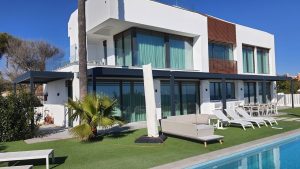
For example, a villa with a garden and swimming pool may offer greater flexibility when creating different outdoor environments. A penthouse, however, may require a more detailed assessment of wind exposure, structural conditions and installation access.
You can explore these differences in our articles Pergola for a Villa: Beyond the Garden and Pool and Villas vs Penthouses: How Pergola Projects Change Depending on the Property.
2. Consider the Property Before Choosing the Pergola
Two terraces with similar dimensions can present very different installation requirements.
The existing building, available fixing points, access conditions and surrounding architecture all influence the feasibility of a pergola project.
Important considerations include:
- Available dimensions: width, projection, height and potential obstacles.
- Structural conditions: walls, floors and suitable fixing points.
- Installation configuration: wall-mounted or freestanding.
- Drainage: how rainwater will be collected and discharged.
- Access: delivery routes, lifting requirements and assembly conditions.
- Planning restrictions: applicable permissions or community requirements.
- Future additions: glass enclosures, ZIP screens, lighting or other accessories.
These details should be assessed before confirming the final configuration.
Wall-mounted or freestanding pergola?
A wall-mounted pergola is connected to an existing building, provided the structure and fixing conditions are suitable.
A freestanding pergola uses its own supporting structure and can be positioned independently within a garden, terrace or other outdoor area.
Neither solution is automatically better.
The appropriate choice depends on the architectural layout, available supports, intended use and technical feasibility.
For homeowners building or renovating a property, considering the pergola early in the process can help coordinate structural requirements and avoid unnecessary changes later.
3. Sun, Wind and Climate: Why Location Matters
The Costa del Sol offers excellent opportunities for outdoor living, but properties in Marbella, Estepona, Mijas and surrounding areas can experience different levels of sun exposure, wind and coastal conditions.
A south-facing terrace may require a different shading strategy from a west-facing outdoor dining area exposed to intense afternoon sunlight.
Similarly, a beachfront villa and a sheltered inland property may have different structural and maintenance considerations.
Choosing a pergola for effective shade
If your main objective is reducing heat, it is important to understand where the problem originates.
You may need to create shade over a seating area, reduce direct solar exposure on a façade or improve comfort beneath an existing roof.
These are different situations, and the same pergola system may not be equally suitable for all of them.
Roof configuration, orientation, ventilation and the possibility of additional side protection should be evaluated together.
Wind exposure and elevated terraces
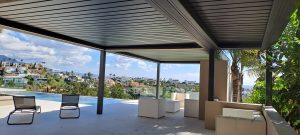
Wind is particularly important for penthouses, exposed terraces and properties close to the coast.
The structure, dimensions, fixing system and operating conditions must be appropriate for the installation location.
A pergola should not be selected solely because it appears robust in photographs.
For further guidance, read Pergola Mistakes in Windy Coastal Areas.
4. Which Type of Pergola Is Right for Your Property?
Once you understand the intended use and installation conditions, you can compare the different roof systems.
The best pergola is not necessarily the one with the most features. It is the one that offers the most suitable combination of protection, flexibility and long-term functionality.
| Pergola roof system | Main function | What to consider |
|---|---|---|
| Bioclimatic pergola with adjustable louvres | Regulates sunlight and natural ventilation by adjusting the louvre angle | Louvre configuration, drainage, motorisation and site exposure |
| Retractable fabric or PVC roof pergola | Allows the roof covering to be extended or retracted | Cover material, opening system, dimensions and weather limitations |
| Fixed panel roof pergola | Provides permanent overhead coverage | Panel material, light transmission where applicable, thermal behaviour and drainage |
Bespoke Aluminium Structures: Adapting the Pergola to the Property
Bespoke aluminium design is not a separate roof system. Depending on the selected product and technical feasibility, bioclimatic, retractable and fixed-roof pergolas can be configured to suit different dimensions, architectural layouts and installation requirements.
The appropriate solution depends on structural design, fixing points, available space, manufacturing limitations and the intended use of the outdoor area.
Bioclimatic pergolas: adjustable sunlight and ventilation
Bioclimatic pergolas use adjustable aluminium louvres to regulate sunlight and encourage natural airflow.
They can be particularly suitable for outdoor dining areas, villa terraces and gardens where changing the amount of shade throughout the day is important.
However, an adjustable louvre roof should not be confused with a retractable roof.
Motorised louvres change their angle; a retractable system opens or moves the roof covering, depending on its design.
If you would like to understand the technology in more detail, read What Is a Bioclimatic Pergola?.
Retractable pergolas: flexibility for outdoor living
Retractable systems allow you to alternate between a covered space and a more open outdoor environment.
Depending on the product, they may use technical fabrics or PVC roof materials with different characteristics.
They can be particularly interesting for large terraces, hospitality venues and outdoor entertaining areas where flexible coverage is desirable.
Fixed roof pergolas: permanent coverage
A fixed or panel roof pergola may be suitable when permanent coverage is the main priority.
However, fixed roof systems differ considerably in their construction.
The characteristics of the panels determine factors such as light transmission, thermal behaviour and the overall performance of the roof.
Bespoke aluminium pergolas: adapting the design to the property
Some projects involve irregular dimensions, architectural obstacles or requirements that cannot be addressed with a standard configuration.
A bespoke aluminium structure may offer greater design flexibility, subject to engineering, manufacturing and installation feasibility.
The key is to assess the entire project rather than choosing a roof system in isolation.
For a broader comparison, see Affordable Alternatives to Bioclimatic Pergolas.
5. Plan Your Pergola Before Requesting a Quotation
Many homeowners begin their search with approximate dimensions, such as a 3 × 4 metre pergola or a larger structure for an outdoor dining area.
Dimensions are important, but they do not tell the whole story.
Two pergolas of the same size can require different structural configurations, fixing systems, accessories and installation methods.
Before requesting a quotation, it helps to prepare:
- Approximate measurements of the space.
- Photographs of the proposed installation area.
- Property location and type.
- Available installation height.
- Intended use of the space.
- Preferred roof system, if known.
- Details of existing walls or structures.
- Plans for future glass enclosures, ZIP screens or lighting.
- Architectural drawings, where available.
This information allows an initial assessment and helps identify what should be checked during a technical survey.
Planning a Pergola on the Costa del Sol?
If you are considering a pergola for your villa, penthouse, garden or commercial property, the first step is understanding what your space requires.
At Pergolas Sunset, we can review the initial details of your project and help identify suitable options based on your requirements and the technical conditions of the property.
If you already have approximate dimensions, photographs or plans, contact our team to discuss your pergola project.
6. How Much Should Price Influence Your Decision?
Price is naturally an important consideration, but quotations should be compared on a like-for-like basis.
A pergola quotation may include different specifications depending on:
- Aluminium profiles and structural configuration.
- Roof system and materials.
- Finishes and coating.
- Motorisation and controls.
- Drainage design.
- Lighting and optional accessories.
- Glass enclosures or ZIP screens.
- Delivery, access and installation.
- Warranty terms and scope of supply.
It is also important to distinguish between supply-only quotations and proposals that include installation.
The lowest initial price does not necessarily represent the most appropriate solution for your property.
For more detailed guidance, read Pergola Price on the Costa del Sol and our article on why bioclimatic pergola prices can vary.
7. Think About Long-Term Use, Maintenance and Future Improvements
A pergola is a long-term addition to a property.
Beyond immediate shade and comfort, it is worth considering how the outdoor space may evolve.
Can glass enclosures or ZIP screens be added later?
In some projects, future enclosures can be planned from the beginning.
However, their feasibility depends on structural characteristics, dimensions, fixing conditions and the compatibility of the selected systems.
Planning these possibilities early can help avoid unnecessary alterations.
You can learn more in our Guide to Bioclimatic Pergolas, Glass Enclosures and Aluminium Louvres.
Aluminium, durability and maintenance
Powder-coated aluminium is widely used for outdoor structures because of its corrosion resistance, design flexibility and relatively low maintenance requirements.
Nevertheless, no outdoor structure is entirely maintenance-free.
Environmental exposure, especially in coastal locations, makes appropriate cleaning, inspection and maintenance important.
A properly designed, manufactured and installed aluminium pergola is intended to provide many years of service, although actual longevity depends on its specification, use and environmental conditions.
Architectural integration and property appeal
A well-designed pergola can improve the appearance, functionality and enjoyment of an outdoor space.
For villas and residential properties on the Costa del Sol, an attractive outdoor living area may also contribute to overall property appeal.
However, any increase in market value depends on the property, location and wider market conditions.
8. Common Mistakes to Avoid When Choosing a Pergola
Before making your final decision, consider these frequent mistakes:
- Choosing a pergola based only on photographs. A design that works for another property may not suit yours.
- Focusing on the product rather than the intended use. Features should respond to genuine needs.
- Ignoring sun orientation. The movement of the sun influences shading and comfort.
- Underestimating wind exposure. Coastal and elevated properties require particular attention.
- Overlooking drainage and fixing points. These are essential parts of the installation design.
- Confusing adjustable louvres with retractable roofs. They provide different types of control.
- Comparing quotations without understanding what is included. Materials, installation and warranty conditions matter.
- Forgetting future improvements. Glass enclosures and ZIP screens may require advance planning.
Good planning can help avoid many of these issues before manufacturing begins.
Pergola Planning Checklist
Before choosing your pergola, make sure you have considered:
-
How you intend to use the space
-
Sun orientation and shade requirements
-
Wind exposure and local climate
-
Available dimensions and installation height
-
Existing structure and fixing possibilities
-
Drainage
-
Roof system and operating requirements
-
Future glass enclosures or ZIP screens
-
Budget and quotation scope
-
Delivery and installation access
Conclusion: The Right Pergola Starts with the Right Questions
Choosing a pergola is not simply about selecting a roof, a colour or a particular model.
It is about creating an outdoor space that works with your property, supports your lifestyle and remains practical over time.
A villa in Marbella may have different requirements from a penthouse in Estepona or a restaurant terrace in Mijas.
The most suitable solution will depend on how the space is used, its exposure to the elements, structural conditions and future plans.
The best pergola is rarely chosen from a catalogue. It is designed around the way you want to live outdoors.
Ready to Plan Your Pergola Project?
At Pergolas Sunset, we work with residential and professional outdoor projects, offering aluminium pergolas and tailored structures for different spaces and requirements.
If you are planning a pergola on the Costa del Sol, our team can help you review the initial requirements and consider the most suitable options.
Contact Pérgolas Sunset to share your project details, photographs or drawings and take the next step towards a well-planned outdoor space.
Frequently Asked Questions
How do I know which type of pergola is right for my property?
Start with the intended use, orientation, local weather conditions and structural limitations. These factors will help determine whether a bioclimatic, retractable or fixed roof solution is appropriate.
Is a bioclimatic pergola always the best option?
No. Bioclimatic pergolas provide adjustable shade and ventilation, but other roof systems may be more suitable when permanent coverage or a larger opening is required.
What is the difference between a wall-mounted and a freestanding pergola?
A wall-mounted pergola is connected to an existing building, subject to suitable fixing conditions. A freestanding pergola uses its own supporting structure. The right choice depends on the layout and technical characteristics of the property.
What type of pergola is suitable for a sunny terrace?
The answer depends on the orientation, solar exposure and ventilation requirements. An adjustable roof may be useful in some situations, while a fixed or retractable system may suit others.
Can a pergola be installed on a penthouse terrace?
It may be possible, but structural conditions, fixing points, wind exposure, access and applicable permissions must be assessed.
Can I add glass enclosures or ZIP screens later?
Potentially, provided the pergola has suitable structural characteristics and dimensions. It is advisable to consider these additions during the initial design.
Does a bioclimatic pergola provide complete protection from rain and wind?
Performance depends on the system, installation and weather conditions. Complete watertightness or protection against every wind condition should not be assumed.
What information should I provide when requesting a pergola quotation?
Approximate dimensions, photographs, property location, intended use and information about existing structures are useful starting points. Architectural drawings can also help when available.
Will a pergola increase the value of my property?
A well-integrated pergola may improve the functionality and visual appeal of a property, but any increase in market value depends on individual circumstances.
Is a technical site survey necessary?
A technical survey is advisable when measurements, fixing conditions, access or other installation requirements need to be verified before the final design is confirmed.


1 Comment
[…] you are still at an early stage, it may also be useful to read our article on how to choose the right pergola, especially if you are comparing a bioclimatic pergola, a fixed structure, a panelled roof or a […]
Comments are closed for this article!