
The best pergola depends on how you intend to use your outdoor space, your property’s orientation, local weather conditions, structural limitations, long-term plans and budget. Rather than choosing a model first, successful pergola projects begin by understanding the property and selecting the solution that best supports your lifestyle.
Choosing a pergola may seem straightforward at first. However, once you begin planning your project, you’ll quickly realise there is no single solution that suits every property.
Should you choose a bioclimatic pergola or a fixed roof? Is a freestanding structure better than a wall-mounted design? Will it provide enough shade throughout the day? How important are wind exposure, orientation and the way you intend to use your outdoor space?
After working on numerous pergola projects for villas, penthouses, gardens, pool areas, residential developments and commercial properties, we have noticed that many people start by asking the wrong question.
They begin by looking for a product.
Instead, they should begin by understanding their project.
The most successful pergola installations are rarely the result of choosing the most expensive model or the one with the longest list of features. They are the result of carefully analysing how the outdoor space will be used, how the property is positioned, and which solution will continue to perform well for many years.
That is exactly what this guide is designed to help you do.
Rather than recommending a specific model, this article explains the same criteria we normally evaluate before proposing a pergola solution for a residential or commercial project on the Costa del Sol.
Whether you are a homeowner, architect, developer, landscape designer, interior designer or property manager, these considerations will help you make a more informed decision while avoiding many of the mistakes that often become apparent only after installation.
In this guide
• Before Choosing a Pergola
• Why Location Matters
• Climate and Orientation
• Which Pergola Is Right?
• Planning Before Manufacturing
• Comparing Quotes
• Common Mistakes
• Frequently Asked Questions
Before Choosing a Pergola, Think About How You Want to Use Your Outdoor Space
One of the most common mistakes is choosing a pergola before defining how the outdoor space is actually going to be used.
The same structure can perform very differently depending on whether it is intended to cover an outdoor dining area, create a comfortable lounge, protect a swimming pool terrace, provide shade over a jacuzzi or simply shelter a vehicle.
Even two properties with terraces of similar dimensions may require completely different solutions.
Before comparing materials, finishes or operating systems, it is worth asking yourself a few simple questions.
- Will this space be used every day or only occasionally?
- Do you want to enjoy it throughout the year or mainly during the summer months?
- Is controlling sunlight at different times of the day important?
- Are you planning to install glass enclosures or ZIP screens in the future?
- Will the space be used for relaxing, entertaining guests, working from home or increasing the value of your property?
Once these questions have been answered, selecting the right pergola becomes significantly easier.
For example, a detached villa with a garden and swimming pool usually offers much greater design flexibility than a penthouse terrace, where structural limitations, wind exposure and installation access often become more important considerations.
Likewise, a pergola designed to protect the entrance of a property or provide covered parking has very different priorities from one intended to create an outdoor living area.
This is why we recommend reading our articles Pergola for a Villa: Beyond the Garden and Pool, Villas vs Penthouses: How Pergola Projects Change Depending on the Property, and More Than Car Protection: How a Pergola Can Transform Your Home Entrance, where we explore these scenarios in much greater detail.
Location Matters More Than Most People Think
Even if two pergolas have exactly the same dimensions, they rarely face the same design challenges.
Installing a pergola in a garden is very different from installing one on an elevated terrace. Likewise, a property overlooking the Mediterranean Sea presents completely different conditions from one located further inland.
Every location introduces its own technical requirements, which should be considered before selecting a structure.
Among the most important factors are:
- The orientation of the property and the movement of the sun throughout the day.
- Prevailing wind conditions.
- Rainfall and exposure to coastal environments.
- Installation height.
- Access for transportation and assembly.
- Existing flooring and fixing points.
- Future extensions or glass enclosures.
Analysing these aspects from the beginning makes it much easier to determine the most suitable structure, dimensions, drainage system and optional features for the project.
In our experience, many long-term problems are not caused by choosing the wrong pergola. They result from failing to properly understand the environment in which it will be installed.
If your property is located on the Costa del Sol, we also recommend reading Pergola Mistakes in Windy Coastal Areas, where we explain how local weather conditions influence pergola design and installation. If your project is located in colder regions, Common Pergola Mistakes in Cold Climates offers additional guidance on factors that are often overlooked during the planning stage.
At this stage, many homeowners realise that choosing a pergola is about far more than selecting a style or comparing prices. Understanding how you intend to use the space, how your property is positioned and how the structure will perform over time is what ultimately leads to a successful project.
Before deciding on a specific model, take the time to evaluate the project as a whole. It will help you compare solutions more objectively and avoid costly changes later.
Climate and Orientation Can Completely Change the Best Pergola Solution
One of the most underestimated factors when planning a pergola is the environment in which it will be installed.
At first glance, two properties may appear very similar. However, a beachfront villa on the Costa del Sol will experience very different environmental conditions from a countryside property or a home further inland. These differences directly influence the design, performance and long-term durability of the structure.
For many properties on the Costa del Sol, the primary objective is to manage solar exposure during most of the year while maintaining natural ventilation and creating a comfortable outdoor living space.
In other regions, rainfall, frost or even snow loads may become much more important considerations.
The orientation of the property also plays a significant role.
A west-facing terrace receives intense afternoon sun, while an east-facing outdoor space experiences a completely different pattern of sunlight. Likewise, a south-facing façade may require a different shading strategy from a north-facing garden.
These factors explain why a pergola that performs perfectly on one property may not be the most suitable choice for another located only a few kilometres away.
For this reason, we always recommend understanding how climate, wind exposure and property orientation influence the overall project before comparing specific models. If your property is located close to the coast, you may also find our article Pergola Mistakes in Windy Coastal Areas particularly useful. It explains many of the design considerations that are often overlooked during the early planning stages.
The Best Pergola Isn’t the One with the Most Features — It’s the One That Fits Your Project
One of the biggest misconceptions is believing that the most advanced pergola is automatically the best choice.
In reality, every project has different priorities.
Some homeowners want complete control over sunlight and natural ventilation throughout the day.
Others simply need reliable weather protection with minimal maintenance.
Some properties are designed with future glass enclosures or ZIP screens in mind, while others focus primarily on creating an elegant outdoor entertaining area.
Architects may prioritise architectural integration, whereas developers often seek a solution that combines durability, aesthetics and long-term value.
This is why no single pergola system is suitable for every project.
The objective should never be to choose the most expensive solution.
The objective is to choose the solution that best matches the way the outdoor space will actually be used.
If you are still unfamiliar with the different systems available, our article What Is a Bioclimatic Pergola? explains how adjustable louvre roofs work, while our Guide to Bioclimatic Pergolas, Glass Enclosures and Aluminium Louvres explores how different systems can be combined to create comfortable outdoor spaces throughout the year.
Likewise, if your project requires a more cost-conscious approach, you may also wish to read Affordable Alternatives to Bioclimatic Pergolas, where we compare different solutions depending on budget, functionality and long-term expectations.
Which Type of Pergola Is Right for Your Property?
After understanding how you intend to use the space, the next step is identifying which type of pergola is most likely to meet those requirements.
There is no universal answer, but certain solutions tend to perform better depending on the project.
Bioclimatic Pergolas
A bioclimatic pergola is often the preferred option for homeowners who want maximum flexibility.
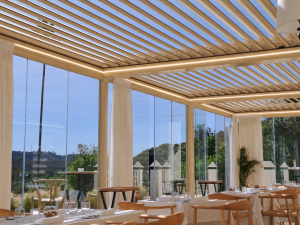
Adjustable aluminium louvres allow you to regulate sunlight, ventilation and shade throughout the day, creating a comfortable outdoor environment during different seasons.
They are particularly popular for:
- Villas with swimming pools.
- Outdoor dining areas.
- Luxury terraces.
- Premium residential developments.
- Outdoor living spaces used throughout the year.
Panel Roof Pergolas
When the priority is permanent weather protection rather than adjustable shading, a panel roof pergola can often be a more appropriate solution.
These structures are commonly chosen for:
- Covered terraces.
- Carports.
- Entrance canopies.
- Outdoor storage areas.
- Properties where fixed protection is preferred.
Retractable Fabric Pergolas
Large outdoor entertaining areas sometimes require greater flexibility.
Retractable fabric pergolas provide generous shade while allowing the roof to open whenever direct sunlight is preferred.
They are frequently specified for:
- Restaurants.
- Hotels.
- Beach clubs.
- Large terraces.
- Commercial outdoor spaces.
Bespoke Aluminium Structures
Not every project fits within standard dimensions.
Architectural features, irregular layouts or existing buildings sometimes require completely bespoke aluminium structures.
These solutions allow architects and property owners to maximise available space while maintaining the overall architectural language of the property.
The Right Pergola Depends on the Entire Project
Rather than asking:
«Which pergola is the best?»
a much better question is:
«Which pergola best supports the way I want to use this outdoor space over the next ten or fifteen years?»
That small change in perspective usually leads to much better decisions.
If you’re still comparing different pergola systems, avoid making your decision based solely on photographs or product specifications.
Every property has its own structural constraints, orientation, climate and lifestyle requirements. Understanding these factors first will help you compare solutions much more objectively and choose a pergola that continues to add value to your property for years to come.
A Successful Pergola Project Begins Long Before Manufacturing
One of the biggest misconceptions we encounter is the belief that obtaining an accurate quotation only requires providing the dimensions of the area.
In reality, two pergolas with identical measurements may require completely different engineering solutions, installation methods and budgets.
That is why every successful project starts with understanding the property itself rather than simply measuring the available space.
Before recommending a pergola, we usually evaluate several key aspects, including:
- The orientation of the property.
- Existing walls and structural support.
- Available installation height.
- Floor construction and fixing points.
- Drainage possibilities.
- Access for delivery and installation.
- Architectural restrictions.
- Local planning requirements where applicable.
- Future additions such as glass enclosures, ZIP screens or lighting.
- How the outdoor space may evolve over time.
The more information available at this stage, the easier it becomes to compare different solutions objectively and avoid unnecessary design changes later in the process.
For this reason, we always recommend preparing the project before requesting quotations.
If you’re unsure what information installers normally require, our article Before Requesting a Pergola Quote on the Costa del Sol explains exactly what you should prepare before contacting suppliers.
Once you have received different quotations, we also recommend reading How to Compare Pergola Quotes, where we explain why the cheapest proposal is not always the one that delivers the best long-term value.
Price Matters — But It Should Never Be the Only Deciding Factor
Budget is naturally one of the first questions most homeowners ask.
However, focusing exclusively on the final price often leads to misleading comparisons.
Not every quotation includes the same materials, structural calculations, drainage solutions, installation complexity, motorisation systems, finishes or future expansion possibilities.
Two pergolas may appear very similar in photographs while offering completely different levels of performance, durability and long-term usability.
For example, differences in aluminium profiles, louvre design, powder coating quality, drainage engineering or installation standards can significantly influence both the lifespan of the pergola and the overall ownership experience.
Instead of asking:
«Which pergola is cheaper?»
a more useful question is:
«What am I actually getting for my investment?»
A well-designed pergola should not simply provide shade today.
It should continue adding value to your property for many years while requiring minimal maintenance and remaining compatible with future improvements.
If budget is an important part of your decision, our article Pergola Price on the Costa del Sol explains the main factors that influence pricing, while Why Are There Such Big Price Differences Between Pergolas? explores why apparently similar quotations can vary considerably.
Understanding these differences makes it much easier to compare proposals fairly and avoid expensive surprises after installation.
The Most Common Mistakes We See Before Installing a Pergola
After working on a wide variety of residential and commercial projects, we’ve noticed that the same mistakes appear again and again.
Fortunately, nearly all of them can be avoided with better planning.
The most common include:
Choosing a pergola based only on photographs
A beautiful installation in another property doesn’t automatically mean it will suit yours.
Every project has different structural, architectural and environmental conditions.
Focusing on the product instead of the project
People often compare models before defining how they actually want to use the space.
In reality, the intended use should always guide the choice of pergola.
Ignoring sun orientation
The movement of the sun throughout the day has a major influence on comfort, shading and overall usability.
A pergola that works perfectly on one façade may perform very differently on another.
Underestimating wind exposure
This is particularly important for coastal properties and elevated terraces.
Wind should always be considered during the design stage rather than after installation.
Forgetting about drainage
Rainwater management is one of the least visible yet most important aspects of any pergola installation.
Good drainage protects both the structure and the surrounding outdoor space.
Thinking Only About Today’s Needs
Many homeowners later decide to install glass enclosures, ZIP screens, integrated lighting or heating.
Planning for these possibilities from the beginning often avoids unnecessary modifications in the future.
Comparing Quotes Without Understanding What’s Included
Price alone tells very little.
Understanding materials, engineering, finishes, installation standards and warranty conditions provides a much more meaningful comparison.
Ultimately, choosing a pergola is not simply about buying an outdoor structure.
It is about creating an outdoor living environment that will become part of your property for many years.
The more carefully the project is planned today, the more enjoyable and valuable that space is likely to become tomorrow.
What We’ve Learned After Dozens of Pergola Projects
One lesson appears repeatedly.
The homeowners who spend more time defining their project before requesting quotations almost always end up making better decisions.
The project comes first.
The pergola comes second.
Pergola Planning Checklist
Before requesting quotations, make sure you have considered:
✅ How you intend to use the space
✅ Property orientation
✅ Wind exposure
✅ Available installation height
✅ Drainage
✅ Existing structure
✅ Future glass enclosures
✅ Lighting requirements
✅ Budget expectations
✅ Access for installation
Many of these recommendations come from patterns we’ve observed across numerous pergola projects over the years — something we’ll explore in more detail in a dedicated article.
Conclusion
Choosing the Right Pergola Means Designing the Way You’ll Enjoy Your Outdoor Space
When people begin looking for a pergola, they often focus on colours, roof styles or optional extras.
Yet these decisions are only the final step in a much bigger process.
The real objective is understanding how you want to experience your outdoor space, how your property is positioned and which solution will continue to meet your needs over the coming years.
A luxury villa overlooking the Mediterranean presents different challenges from a penthouse terrace or a countryside home.
Likewise, a pergola designed for outdoor dining requires a different approach from one intended to protect vehicles, create a poolside lounge or increase the usable living area of a property.
This is why there is no universal «best pergola».
There is only the pergola that best matches your project.
Taking the time to understand your property, your lifestyle and your long-term plans will almost always lead to a better investment than choosing a solution based solely on appearance or price.
In our experience, the most successful pergola projects are never defined by the catalogue.
They are defined by good planning.
The best pergola is rarely chosen from a catalogue. It’s designed around the way you want to live outdoors.
Planning a Pergola for Your Property?
If you’re considering a pergola for your villa, terrace, garden or commercial property on the Costa del Sol, take the time to evaluate the project before comparing products.
Photographs and brochures can provide inspiration, but every property has its own structural conditions, orientation, climate and lifestyle requirements.
If you already have approximate dimensions, photographs or architectural drawings, we’d be happy to help you assess the project and identify the most suitable approach before you make a final decision.
A well-planned pergola is rarely the result of choosing the most expensive option.
More often, it’s the result of asking the right questions from the very beginning.
Frequently Asked Questions
How do I know which type of pergola is right for my property?
The best pergola depends on how you intend to use your outdoor space, the orientation of your property, local weather conditions, structural limitations and your long-term plans. A pergola for a beachfront villa may require a completely different solution from one installed on a penthouse terrace or in a garden further inland.
Is a bioclimatic pergola always the best option?
Not necessarily.
Bioclimatic pergolas offer excellent flexibility by allowing you to control sunlight and ventilation through adjustable aluminium louvres. However, depending on your project, a panel roof pergola, a retractable fabric pergola or a bespoke aluminium structure may provide a more suitable solution.
The right choice depends on your project rather than on the popularity of a particular system.
What’s the difference between a wall-mounted and a freestanding pergola?
A wall-mounted pergola is attached directly to an existing building and is often used to extend terraces or create covered outdoor living areas.
A freestanding pergola is structurally independent and can be installed almost anywhere on the property, making it ideal for gardens, swimming pools and open landscapes.
The most appropriate solution depends on the available space and the architectural layout of the property.
Does property orientation really matter?
Absolutely.
The orientation of your property determines how much sunlight reaches the pergola throughout the day.
A west-facing terrace, for example, receives much stronger afternoon sun than an east-facing one, which directly influences comfort, shading requirements and the most appropriate pergola configuration.
Can strong coastal winds affect a pergola?
Yes.
Properties located close to the sea are often exposed to higher wind loads than inland properties.
Wind conditions should always be considered during the design stage, influencing structural dimensions, fixing methods and, in some cases, the maximum recommended size of the pergola.
Should I prepare anything before requesting a quotation?
Yes.
The more information you can provide, the more accurate the proposal will be.
Useful information includes:
- approximate dimensions;
- photographs of the area;
- property location;
- orientation;
- installation height;
- intended use;
- any future plans for glass enclosures, ZIP screens or lighting.
Can I install glass enclosures or ZIP screens later?
In many cases, yes.
However, it is always advisable to consider these possibilities during the initial design phase so that the structure can be prepared accordingly.
Planning ahead often avoids unnecessary modifications in the future.
How should I compare different pergola quotations?
Price should never be the only criterion.
Compare:
- structural design;
- aluminium quality;
- drainage system;
- finishes;
- motorisation;
- installation method;
- warranty;
- after-sales support.
Two quotations may appear similar while offering very different levels of performance and long-term reliability.
Will a pergola increase the value of my property?
A well-designed pergola can significantly enhance the functionality and visual appeal of outdoor spaces.
Although every property is different, creating an attractive outdoor living area is often considered a valuable feature, particularly in locations such as the Costa del Sol where outdoor living forms an important part of the lifestyle.
Is it worth arranging a technical site survey?
Whenever possible, yes.
A site survey allows measurements to be verified, structural conditions to be assessed and potential installation challenges to be identified before manufacturing begins.
This reduces the likelihood of unexpected modifications during installation.
Can a pergola be installed on every terrace?
Not always.
Some terraces require structural assessment before installation, particularly when large spans or additional features such as glass enclosures are planned.
Existing construction, load capacity and fixing options should always be evaluated before selecting the final design.
How long should a quality aluminium pergola last?
A high-quality aluminium pergola, correctly designed and professionally installed, is intended to provide many years of reliable service with relatively low maintenance.
Its longevity depends on factors such as material quality, protective finishes, exposure to environmental conditions and regular maintenance.




1 Comentario
[…] you are still at an early stage, it may also be useful to read our article on how to choose the right pergola, especially if you are comparing a bioclimatic pergola, a fixed structure, a panelled roof or a […]
¡Los comentarios están cerrados para este artículo!