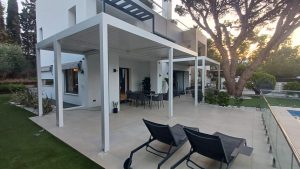
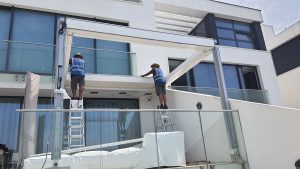
Elegir una cubierta para una terraza, jardín, porche o zona exterior no siempre es sencillo. A primera vista, muchas soluciones pueden parecer parecidas: un toldo, una cubierta fija, un techo de cristal, una estructura de policarbonato o una pérgola bioclimática.
Todas pueden aportar sombra o protección en determinados contextos, pero no ofrecen la misma experiencia de uso, ni el mismo comportamiento frente al sol, la ventilación, la lluvia, el viento, el mantenimiento o la integración con la vivienda.
Por eso, antes de elegir una solución, conviene entender qué ventajas puede aportar una pérgola bioclimática frente a otros sistemas de cubiertas exteriores.
Este artículo no pretende decir que una pérgola bioclimática sea siempre la única opción válida. Cada espacio debe estudiarse de forma individual. Sin embargo, cuando se busca regular luz, sombra, ventilación y protección en un mismo sistema, la pérgola bioclimática ofrece una combinación especialmente interesante.
Si todavía está en una fase inicial, puede consultar primero qué es una pérgola bioclimática, donde explicamos cómo funciona este tipo de estructura y qué factores conviene valorar antes de elegirla.
Qué diferencia a una pérgola bioclimática
Una pérgola bioclimática es una estructura de aluminio cuya cubierta está formada por lamas motorizadas, diseñadas para modificar su posición y regular las condiciones del espacio situado bajo la pérgola.
Al orientar o abrir las lamas es posible regular la entrada de luz solar y favorecer la circulación natural del aire, mientras que al cerrarlas se genera una superficie de protección superior que permite gestionar la sombra y, según el sistema, conducir el agua hacia el drenaje integrado.
Esta capacidad de regulación es una de las principales diferencias frente a una cubierta completamente fija: la pérgola puede responder de manera diferente según la incidencia solar, la temperatura, la ventilación deseada o las condiciones del momento.
Pero el comportamiento de una pérgola bioclimática no depende únicamente de que sus lamas puedan moverse. El diseño y la construcción de esas lamas también son importantes.
La cámara de aire de las lamas también influye en el confort
En los sistemas de pérgolas bioclimáticas que trabajamos, las lamas de aluminio cuentan con un diseño que incorpora una cámara de aire interior.
Esta configuración ayuda a limitar la transmisión directa de la temperatura exterior a través de la lama hacia el espacio situado bajo la pérgola. Cuando las lamas permanecen cerradas y reciben radiación solar, la cámara de aire contribuye a reducir esa transferencia térmica directa en comparación con soluciones constructivas más simples.
Es un aspecto que puede pasar desapercibido cuando se comparan pérgolas únicamente por dimensiones, apariencia o funcionamiento del motor, pero que resulta relevante para entender por qué dos sistemas aparentemente similares pueden ofrecer características y comportamientos diferentes.
Por eso, al valorar una pérgola bioclimática conviene analizar no solo si las lamas son orientables o motorizadas, sino también cómo están diseñadas, qué características tiene su perfil y cómo se integra el conjunto de cubierta, estructura y drenaje.
En una misma terraza, jardín o porche, una pérgola bioclimática puede ayudar a:
- regular la incidencia directa del sol;
- favorecer la ventilación natural mediante la apertura y orientación de las lamas;
- generar distintos niveles de sombra;
- limitar la transmisión térmica directa a través de la cubierta gracias al diseño de las lamas;
- ofrecer protección frente a lluvia moderada cuando las lamas están cerradas;
- mantener o recuperar entrada de luz natural cuando las condiciones lo permiten;
- preparar el espacio para cerramientos o cortinas ZIP;
- integrar iluminación, sensores y automatización.
La combinación entre regulación solar, ventilación, diseño de las lamas y gestión del agua es, por tanto, una de las características que diferencia una pérgola bioclimática de otras soluciones de cubierta exterior.
Regulación de luz, sombra y ventilación
La posibilidad de modificar la posición de las lamas permite adaptar la cubierta a necesidades que pueden cambiar a lo largo del día o del año.
En zonas como Málaga, Marbella, Estepona, Mijas o Benalmádena, donde la vida exterior forma parte del uso habitual de muchas viviendas, no siempre se necesita la misma cantidad de sombra durante todo el día.
Una terraza puede necesitar protección fuerte al mediodía, más ventilación por la tarde y mayor entrada de luz durante el invierno. Una cubierta fija no permite esa adaptación. Un toldo puede generar sombra, pero no ofrece el mismo control estructural ni la misma integración con drenaje, iluminación o cerramientos.
Las lamas orientables permiten ajustar la entrada de luz y favorecer la circulación de aire, evitando que el espacio se convierta en una zona excesivamente cerrada o calurosa.
Por eso, en muchas viviendas de la Costa del Sol, una pérgola bioclimática no se instala solo para crear sombra, sino para mejorar la forma de utilizar la terraza durante más horas y durante más meses al año.
Protección frente a lluvia moderada y drenaje integrado
Otra ventaja importante está en la gestión del agua.
Cuando las lamas se cierran, una pérgola bioclimática bien diseñada ayuda a conducir el agua hacia el sistema de drenaje integrado, normalmente a través de vigas y postes de sujeción.
Esto permite que una terraza, porche o jardín cubierto pueda utilizarse con mayor comodidad en situaciones de lluvia moderada.
Sin embargo, es importante explicarlo correctamente: una pérgola bioclimática no debe entenderse como una cubierta completamente estanca en cualquier circunstancia. El nivel de protección dependerá del sistema elegido, la instalación, la orientación, el viento lateral, la intensidad de la lluvia y las condiciones reales del espacio.
En episodios de lluvia intensa, viento fuerte o fenómenos extremos, cualquier sistema exterior puede tener limitaciones. Por eso, más que hablar de estanqueidad absoluta, conviene hablar de protección, drenaje y diseño adecuado.
Este punto es especialmente importante en terrazas elevadas, áticos o espacios muy expuestos al viento. En esos casos, puede ser recomendable complementar la pérgola con cerramientos de cristal, cortinas ZIP u otras soluciones laterales, siempre que el proyecto lo permita.
Puede ampliar este enfoque en nuestra guía de pérgolas bioclimáticas y cerramientos.
Frente a un toldo: más estructura, estabilidad y durabilidad
Los toldos pueden ser una solución válida cuando se busca sombra puntual, una inversión más contenida o una intervención más ligera. En determinados espacios, cumplen bien su función.
Pero no ofrecen la misma experiencia que una pérgola bioclimática.
La principal diferencia está en la estructura. Una pérgola bioclimática de aluminio se plantea como una solución más estable, duradera e integrada en la vivienda. No depende únicamente de un tejido, brazos extensibles o sistemas expuestos al desgaste por viento, sol o lluvia.
Frente a un toldo, una pérgola bioclimática puede aportar:
- mayor presencia estructural;
- mejor integración arquitectónica;
- posibilidad de incorporar drenaje;
- iluminación integrada;
- sensores;
- cerramientos de cristal o cortinas ZIP;
- mayor sensación de espacio exterior permanente;
- mejor comportamiento a largo plazo si está bien instalada.
Esto no significa que un toldo no pueda ser adecuado. De hecho, en algunos proyectos una solución textil puede tener sentido, especialmente cuando se busca algo más sencillo, ligero o económico.
Pero si el objetivo es transformar una terraza en un espacio más funcional, estable y utilizable durante gran parte del año, la pérgola bioclimática suele ofrecer más posibilidades.
Si está valorando diferentes sistemas, puede resultarle útil leer también pérgola bioclimática vs otras pérgolas.
Frente a techos de cristal o policarbonato: más control térmico y ventilación
Los techos de cristal o policarbonato pueden aportar entrada de luz natural y protección superior, pero presentan una limitación habitual: el control térmico.
En zonas con mucha radiación solar, como la Costa del Sol, una cubierta transparente puede generar acumulación de calor si no se combina con ventilación, sombra adicional o sistemas complementarios. En algunos casos, el cliente termina necesitando añadir un toldo, una cortina o una protección extra para reducir el efecto invernadero.
La pérgola bioclimática, en cambio, permite regular la entrada de sol desde la propia cubierta.
Al orientar las lamas, se puede:
- permitir entrada de luz sin recibir sol directo;
- favorecer ventilación natural;
- reducir acumulación de calor;
- abrir parcialmente la cubierta;
- cerrar en caso de lluvia moderada;
- adaptar el espacio según la estación.
Esto puede ser especialmente útil en terrazas orientadas al sur u oeste, donde el sol de tarde puede hacer incómodo el uso del exterior durante los meses más cálidos.
En climas más fríos, como algunas zonas de Castilla y León, también puede ser necesario valorar cerramientos laterales, orientación y protección frente a lluvia o heladas. La ventaja está en poder diseñar el conjunto según el clima real del proyecto, no solo según el aspecto visual de la cubierta.
Frente a cubiertas fijas: más flexibilidad de uso
Una cubierta fija puede ser adecuada cuando se busca protección permanente, sombra estable o una solución sencilla para una zona de paso, aparcamiento o porche.
Pero tiene una limitación clara: no se adapta.
Si cubre demasiado, puede oscurecer la vivienda. Si deja pasar demasiada luz, puede no proteger lo suficiente en verano. Si no ventila bien, puede acumular calor. Y si no se ha previsto correctamente el drenaje, puede generar problemas de mantenimiento.
La pérgola bioclimática ofrece una respuesta más flexible porque permite modificar el comportamiento del espacio sin cambiar la estructura.
Puede utilizarse para:
- abrir más la cubierta en invierno;
- cerrar más en verano;
- permitir ventilación cruzada;
- proteger durante lluvia moderada;
- crear sombra parcial;
- mantener una sensación exterior más agradable.
Esta flexibilidad es especialmente valiosa en viviendas donde la terraza o el jardín se utilizan como una extensión del salón, la cocina o la zona de piscina.
Si su objetivo es aprovechar mejor el exterior durante más meses, puede leer también cómo disfrutar de su pérgola todo el año.
Mantenimiento y vida útil
Una pérgola bioclimática de aluminio suele requerir un mantenimiento más sencillo que otros sistemas más expuestos al desgaste de tejidos, lonas o superficies transparentes difíciles de limpiar.
El aluminio lacado ofrece buena resistencia al exterior, a la humedad y a la exposición solar. Además, al tratarse de una estructura diseñada para permanecer instalada durante muchos años, permite una integración más estable con la vivienda.
Aun así, conviene evitar la idea de que no necesita ningún mantenimiento.
Como cualquier sistema exterior, una pérgola debe revisarse y limpiarse periódicamente. La frecuencia dependerá del entorno:
- árboles cercanos;
- polvo;
- salinidad;
- viento;
- lluvia;
- presencia de aves;
- uso de cerramientos;
- ubicación en terraza, jardín, ático o zona de piscina.
En general, conviene limpiar lamas, canalones, guías, desagües y mecanismos con cierta regularidad. También puede ser recomendable revisar motores, sensores y elementos móviles, especialmente si la pérgola tiene mucho uso o está en una zona expuesta.
Un mantenimiento básico ayuda a conservar la estética, el funcionamiento y la vida útil del sistema.
Posibilidad de incorporar cerramientos y accesorios
Una ventaja importante de las pérgolas bioclimáticas es que pueden formar parte de un proyecto exterior más completo.
En muchos casos, la estructura puede prepararse para incorporar:
- cerramientos de cristal;
- cortinas ZIP;
- iluminación LED;
- sensores de lluvia o viento;
- calefactores;
- domótica;
- celosías;
- sistemas de protección lateral.
Esto permite transformar una terraza, jardín o porche en una zona más confortable durante buena parte del año.
No obstante, estos complementos deben pensarse desde el inicio, aunque se instalen más adelante. Incorporar cerramientos, por ejemplo, puede cambiar el comportamiento frente al viento, la privacidad, la sensación térmica y la estructura necesaria.
Por eso, antes de elegir una pérgola, conviene valorar no solo el uso actual del espacio, sino también su posible evolución futura.
Cuándo una pérgola bioclimática puede no ser la mejor opción
Una buena elección no consiste en instalar siempre la solución más completa o más sofisticada.
En algunos proyectos, una pérgola bioclimática será la mejor alternativa. En otros, puede tener más sentido valorar una cubierta panelada, una lona tensada, una pérgola retráctil, una estructura de aluminio a medida o una solución más sencilla.
Por ejemplo:
- si se busca una cubierta fija para una zona de aparcamiento;
- si el espacio tiene una geometría irregular;
- si la prioridad es una solución textil más ligera;
- si el presupuesto disponible no encaja con una bioclimática;
- si se necesita cubrir una superficie muy amplia;
- si la estructura requiere una combinación especial de módulos;
- si el espacio no permite una instalación adecuada de lamas orientables.
En estos casos, el asesoramiento profesional es clave para no forzar una solución que no corresponde al proyecto.
La mejor pérgola no siempre es la más cara o la más compleja. Es la que responde mejor al uso previsto, al entorno, a la vivienda y al presupuesto real del cliente.
Si está comparando opciones, puede consultar también cómo comparar presupuestos de pérgolas.
Ventajas principales de una pérgola bioclimática
A modo de resumen, una pérgola bioclimática puede aportar ventajas muy relevantes frente a otros sistemas de cubierta exterior:
| Ventaja | Qué aporta al espacio exterior |
|---|---|
| Regulación de lamas | Permite controlar luz, sombra y ventilación |
| Estructura de aluminio | Mayor durabilidad e integración arquitectónica |
| Drenaje integrado | Ayuda a gestionar el agua de lluvia moderada |
| Confort térmico | Reduce exposición directa al sol y mejora ventilación |
| Diseño a medida | Se adapta mejor a terrazas, jardines, áticos o porches |
| Compatibilidad con cerramientos | Permite ampliar el uso del espacio durante más meses |
| Integración estética | Aporta una imagen más ordenada y permanente |
| Automatización | Facilita el uso diario mediante motor, sensores o domótica |
Costa del Sol: por qué esta solución encaja tan bien
En la Costa del Sol, una pérgola exterior debe responder a condiciones muy concretas: muchas horas de sol, alta exposición en terrazas y jardines, viento en determinadas zonas, ambiente marino, necesidad de sombra y deseo de vivir el exterior durante buena parte del año.
Por eso, en viviendas de Marbella, Estepona, Mijas, Benalmádena, Málaga o Cádiz, una pérgola bioclimática puede ser una solución muy interesante cuando se busca equilibrio entre estética, confort y funcionalidad.
También puede encajar en villas, áticos, porches, zonas de piscina, terrazas elevadas o espacios exteriores de negocios y hostelería.
La clave está en no elegir solo por fotografía o por precio. La orientación, el viento, las dimensiones, la altura, el tipo de vivienda, los accesos y los posibles cerramientos pueden cambiar completamente la solución recomendada.
Si su vivienda está en una zona expuesta, también puede resultarle útil leer errores al elegir una pérgola en zonas de viento y costa.
Preguntas frecuentes sobre las ventajas de una pérgola bioclimática
¿Qué ventaja tiene una pérgola bioclimática frente a un toldo?
La principal ventaja es que ofrece una estructura más estable, duradera e integrada en la vivienda. Además, permite regular luz, sombra y ventilación mediante lamas orientables, y puede incorporar iluminación, drenaje, sensores o cerramientos.
¿Una pérgola bioclimática protege de la lluvia?
Puede ayudar a proteger frente a lluvia moderada gracias al cierre de lamas y al sistema de drenaje integrado. Sin embargo, no debe entenderse como una cubierta completamente estanca en cualquier circunstancia. El resultado dependerá del sistema, la instalación, la orientación, el viento y la intensidad de la lluvia.
¿Es mejor una pérgola bioclimática que un techo de cristal?
Depende del proyecto. El cristal permite entrada de luz, pero puede generar acumulación de calor si no se combina con ventilación o protección solar. La pérgola bioclimática permite regular luz y ventilación desde la propia cubierta.
¿Qué diferencia hay entre una pérgola bioclimática y una cubierta fija?
Una cubierta fija ofrece protección permanente, pero no permite regular la entrada de luz o ventilación. La pérgola bioclimática aporta más flexibilidad porque sus lamas pueden orientarse según el momento del día o la estación.
¿Requiere mucho mantenimiento una pérgola bioclimática?
No suele requerir un mantenimiento complejo, pero sí limpieza y revisión periódica. Conviene mantener limpios lamas, canalones, desagües y mecanismos, especialmente en zonas con polvo, salinidad, árboles cercanos o exposición al viento.
¿Se pueden añadir cerramientos de cristal o cortinas ZIP?
En muchos casos sí, siempre que el sistema y la estructura lo permitan. Lo recomendable es prever estos complementos desde el inicio, aunque se instalen más adelante.
¿Una pérgola bioclimática sirve para cualquier espacio?
No necesariamente. Funciona muy bien en muchos proyectos, pero debe valorarse la geometría, la estructura, el viento, la orientación, el drenaje, los accesos y el uso previsto del espacio.
¿Cómo saber si merece la pena instalar una pérgola bioclimática?
Merece la pena cuando se busca algo más que sombra: regulación de luz, ventilación, protección, durabilidad, integración estética y posibilidad de usar mejor el espacio exterior durante buena parte del año.
Conclusión: la ventaja no está solo en la cubierta, sino en el control del espacio
La principal ventaja de una pérgola bioclimática frente a otros sistemas de cubierta no está únicamente en proteger del sol. Está en permitir que el espacio exterior se adapte mejor a cada momento.
Frente a un toldo, aporta estructura e integración. Frente a un techo de cristal o policarbonato, permite mayor control de luz y ventilación. Frente a una cubierta fija, ofrece más flexibilidad de uso.
Pero la decisión correcta no debería tomarse solo por el tipo de producto. Debe partir del uso real del espacio, la orientación, el clima, la vivienda, los accesos, la instalación y las expectativas del cliente.
En Pérgolas Sunset diseñamos e instalamos pérgolas bioclimáticas, pérgolas de aluminio, cubiertas paneladas, soluciones retráctiles y cerramientos para terrazas, jardines, áticos, villas, porches y espacios exteriores en la Costa del Sol, Andalucía y Castilla y León.
Si está valorando instalar una pérgola y quiere comparar opciones con criterio, puede contactar con nuestro equipo, consultar nuestro catálogo de pérgolas o visitar nuestra galería de proyectos.