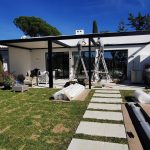
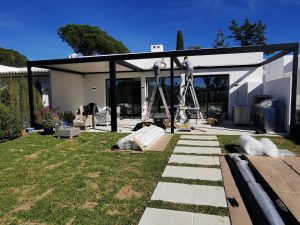
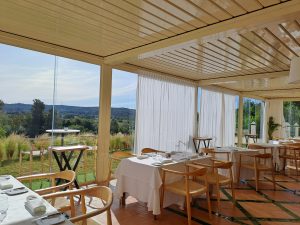
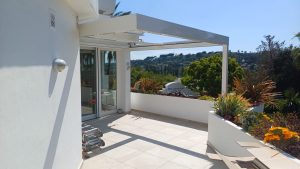
Autumn on the Costa del Sol does not necessarily mean the end of outdoor living. In Marbella, Estepona, Mijas and the surrounding areas, terraces and gardens can remain an important part of everyday life well beyond the summer months.
It is also a useful time to consider how an outdoor space could work better in the future.
Perhaps your terrace receives too much afternoon sun. Your garden dining area may lack shelter, or you may be renovating a villa and wondering whether a pergola should form part of the overall design.
Whatever the situation, planning a pergola in autumn is not simply about choosing a roof before the next summer arrives. It is an opportunity to understand the property, assess the available options and make decisions that suit the way you want to use the space.
For international homeowners on the Costa del Sol, as well as architects, builders and property professionals advising their clients, early planning can help identify considerations that might otherwise be overlooked.
Here are five reasons why autumn can be a sensible time to begin.
1. Understand How You Want to Use Your Outdoor Space
Before choosing a pergola, consider what you want the space to achieve.
A terrace used mainly for summer lunches has different requirements from a sheltered seating area intended for use on cooler evenings. A pergola beside a swimming pool may serve a different purpose from one covering an outdoor kitchen or connecting the house to the garden.
Think about the activities you would like to accommodate:
- Outdoor dining with sufficient room for chairs and circulation.
- A lounge area for relaxing or entertaining guests.
- Shade near the swimming pool.
- A covered transition between indoor and outdoor spaces.
- A more versatile terrace that can accommodate different activities throughout the year.
Autumn offers an opportunity to reflect on what worked during the summer and what you would like to improve.
For example, if an outdoor dining area became uncomfortable during the hottest hours, the solution may involve more than simply covering the table. The orientation of the terrace, the movement of the sun, the position of nearby walls and the relationship with the house can all influence the design.
This is why we encourage homeowners to think about their priorities before selecting a model.
Our article What We Have Learned at Pérgolas Sunset: A Pergola Project Does Not Start by Choosing a Model explores this approach in greater detail.
2. Assess the Property Before Choosing a Pergola System
Two terraces with similar dimensions can require very different pergola solutions.
A garden beside a villa may offer several possible positions for a freestanding or wall-mounted structure. A penthouse terrace, however, may involve greater wind exposure, limited access, specific fixing requirements or restrictions established by the owners’ community.
These considerations matter regardless of the season in which the pergola is installed.
Villas, gardens and ground-floor terraces
For a villa, it is worth reviewing how the proposed pergola will relate to the façade, garden, pool area and existing outdoor layout.
Questions to consider include:
- Where will the structure provide the most useful shade?
- Should it be attached to the property or freestanding?
- Will existing walls or architectural features affect its position?
- How will rainwater be managed?
- Is there enough room for furniture and comfortable movement around it?
Penthouses and roof terraces
For penthouses, additional attention may be needed regarding wind exposure, structural suitability, anchoring, waterproofing, access for materials and any applicable community or planning requirements.
A rooftop installation should never be assessed on dimensions alone.
Our guide Villa vs Penthouse Pergola Projects: Why the Installation Changes explains why the same type of pergola can involve very different technical and logistical considerations depending on the property.
Autumn is not automatically a better season for every technical assessment. The advantage is having time to identify these issues before committing to a particular configuration.
3. Coordinate the Pergola with Building or Renovation Work
A pergola may be part of a wider project: a new villa, a terrace refurbishment, a garden redesign or improvements to an existing home.
When several trades are involved, early coordination can help avoid decisions being made in isolation.
For example, the proposed pergola may influence:
- Finished floor levels and paving.
- Potential fixing points and supporting structures.
- Electrical provisions for motorisation or lighting.
- Rainwater drainage.
- Access routes for installation.
- The position of outdoor furniture, glazing or other architectural features.
This is particularly relevant to architects, builders, interior designers and landscape professionals working with international homeowners.
A professional advising a client does not necessarily need to specify the pergola model at the outset. However, identifying the intended location and likely requirements early may preserve useful design options.
The distinction between a new build and an existing property is important.
In a new build, some decisions may be coordinated before construction is complete. During a renovation, there may be opportunities to review existing arrangements. In a finished property, the proposed structure must be assessed in relation to the conditions already in place.
We explore these differences in New Build vs Existing Home: What Changes When Planning a Pergola?.
For homeowners and professionals alike, the objective is not to make every decision immediately. It is to recognise which decisions could affect the project later.
Planning a Pergola for Your Property or Your Client?
If you are considering a pergola for a villa, penthouse or renovation project in Marbella, Estepona, Mijas or elsewhere on the Costa del Sol, Pérgolas Sunset can help you explore the available options.
Whether you are the homeowner or a professional coordinating the project, you can share approximate measurements, photographs or drawings and a description of the intended use.
Contact Pérgolas Sunset to discuss your pergola project.
4. Compare Roof Systems Before Making a Decision
A bioclimatic pergola is one possible solution, but it is not necessarily the right choice for every outdoor space.
The roof system should respond to the property’s characteristics, the intended use and the owner’s priorities.
Bioclimatic pergolas
Bioclimatic pergolas use adjustable aluminium louvres to regulate the amount of sunlight entering the covered area and allow ventilation when conditions permit.
They can be particularly interesting where the owner wants to vary shade and light throughout the day.
Their performance in rain and wind depends on the selected system, its configuration and the installation conditions. They should not be regarded as completely weatherproof enclosed rooms.
Fixed panel-roof pergolas
A fixed panel-roof pergola provides a permanent overhead covering.
Depending on the project, the roof may use different panel materials and configurations. The choice should consider light transmission, insulation characteristics, drainage, appearance and structural requirements.
This option may suit spaces where a permanently covered area is the main priority.
Retractable panel-roof pergolas
A retractable panel system allows the roof covering to be opened or closed according to the design and operating limitations of the selected model.
It may be worth considering where greater flexibility is desired.
Retractable fabric or PVC pergolas
Retractable fabric or PVC roof systems provide another way to create shade while retaining the possibility of opening the covered area.
Their suitability depends on factors such as dimensions, exposure, intended use and the technical specifications of the chosen system.
The key question is not which system is universally best, but which type of covering makes sense for the property and the way the space will be used.
If you are considering additional features such as lighting, ZIP screens or glass enclosures, these should also be discussed early. Their compatibility, fixing requirements and future installation possibilities depend on the pergola and the project.
5. Prepare for the Next Outdoor Living Season Without Rushing the Project
Planning in autumn can give homeowners more time to evaluate their options before the warmer months return.
That does not mean autumn installations are always quicker, that suppliers will necessarily have greater availability or that planning early guarantees a particular completion date.
Lead times can depend on manufacturing, project complexity, technical checks, approvals, site access and installation schedules.
The practical benefit is having an opportunity to make informed decisions.
You may be able to:
- Review how you want to use the space.
- Compare suitable roof systems.
- Discuss preliminary dimensions and configurations.
- Identify potential technical or administrative requirements.
- Consider whether future accessories or lateral enclosures should influence the initial design.
- Coordinate the project with other planned property improvements.
If your objective is to enjoy the pergola during the following summer, the planning process should also take account of the time required to develop and approve the proposal.
For a complementary seasonal perspective, see Planning a Bioclimatic Pergola for Summer on the Costa del Sol.
The two approaches are connected: autumn can be a time to begin considering the project, while preparing for summer involves ensuring that the proposed solution and its installation schedule are realistic.
What Should You Prepare Before Requesting a Pergola Quote?
You do not need a complete technical specification to make an initial enquiry.
However, a few details can help us understand the project and suggest which options deserve further consideration.
A useful starting checklist:
- Property location: Marbella, Estepona, Mijas or another location.
- Property type: Villa, penthouse, ground-floor terrace, garden or another setting.
- Approximate dimensions: Width and depth of the area you would like to cover.
- Photographs or drawings: Including surrounding walls, doors, windows and the proposed installation area.
- Intended use: Dining, lounge, poolside shade, outdoor kitchen or another activity.
- Preferred configuration: Attached or freestanding, if you already have a preference.
- Additional features: Lighting, ZIP screens, glazing or other elements you may wish to consider.
- Project stage: Initial idea, renovation, new build or an existing space ready for assessment.
If you are an architect, builder or another professional advising a client, available plans and information about the construction programme may also be useful.
Not every item needs to be finalised before contacting us. The purpose of the first conversation is to understand the project, not to expect the client to solve its technical details.
Our guide Before Requesting a Pergola Quote on the Costa del Sol: What You Should Know explains how to prepare for this stage.
Once you receive proposals, it is also important to understand what is included and whether different quotations cover comparable systems and installation requirements. Read How to Compare Pergola Quotes on the Costa del Sol before making your decision.
Frequently Asked Questions About Planning a Pergola in Autumn
Is autumn a good time to install a pergola on the Costa del Sol?
Autumn can be a suitable period for some projects, but installation feasibility depends on weather conditions, site access, technical requirements, manufacturing lead times and installer availability. The main reason to begin planning in autumn is to allow time to evaluate the project properly.
Should I choose a bioclimatic pergola for year-round use?
Not necessarily. A bioclimatic pergola can offer useful control over sunlight and ventilation, but the most suitable solution depends on how the space will be used, its exposure and the level of protection expected. Fixed or retractable panel roofs and retractable fabric or PVC systems may also be worth considering.
Can I add glass enclosures or ZIP screens later?
Possibly, but this should be considered during the initial planning stage. The structure, dimensions, fixing points and compatibility of the chosen systems can affect whether later additions are technically feasible. Future installation should not be assumed without assessment.
Do I need permission to install a pergola?
Requirements vary according to the municipality, property type, location and proposed works. In some cases, planning permissions, technical documentation or approval from an owners’ community may be relevant. These requirements should be checked for the specific project before proceeding.
Can architects, builders or property managers contact Pérgolas Sunset on behalf of a client?
Yes. We can discuss proposed pergola projects with homeowners and professionals involved in their planning or coordination. Providing available drawings, approximate measurements and information about the property can help establish the next steps.
Does planning in autumn guarantee installation before summer?
No. Completion dates depend on the final specification, technical feasibility, approvals where required, manufacturing and installation arrangements. Starting the conversation earlier can support better planning, but it does not guarantee a particular installation date.
Make Autumn the Starting Point for a Better Outdoor Space
A pergola should be considered in relation to the property, the people using it and the wider outdoor environment.
For some homeowners, that means creating a shaded dining area beside the garden. For others, it may involve making a penthouse terrace more versatile or incorporating a pergola into a villa renovation.
For architects, builders and other professionals, it may mean identifying the requirements of an outdoor structure before related design or construction decisions are finalised.
Whatever the project, autumn can be a useful moment to start asking the right questions.
At Pérgolas Sunset, we work with bespoke aluminium pergolas and outdoor structures, considering the intended use, configuration and technical requirements of each project. Our own installation services cover Andalusia, particularly the Costa del Sol, and Castilla y León; arrangements for other locations are assessed individually.
Whether you are planning your own outdoor space or advising a client, we welcome an initial conversation about what you would like to achieve.
Contact Pérgolas Sunset and start planning your pergola project.
The suitability of any pergola system, accessory or installation arrangement is subject to the characteristics of the property, applicable requirements and technical assessment.