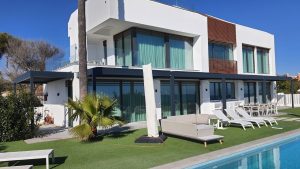
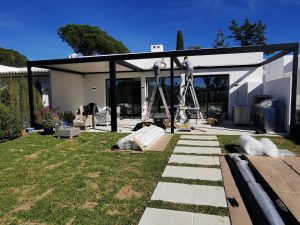
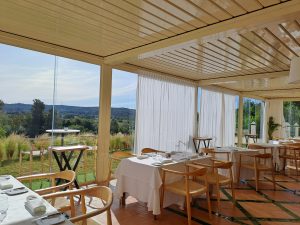
Requesting a quote for a bespoke pergola may seem straightforward: provide a few measurements, choose a model and ask for a price.
In practice, preparing a meaningful pergola quote involves much more than calculating square metres.
How you want to use the outdoor space, the type of property, approximate dimensions, location, exposure, access, roof system, possible enclosures and additional equipment can all influence the solution worth considering.
This does not mean that you need to have every detail of your project decided before making an enquiry.
A first conversation can help clarify the possibilities. The more we understand about what you want to achieve and the space you want to transform, the more useful that initial assessment can be.
Start with what you want the outdoor space to achieve
Before choosing a pergola model, it is worth considering a more fundamental question:
What do you want this outdoor space to do for you?
Two terraces of similar dimensions can lead to very different projects.
You may primarily want shade during the hottest part of the day. Perhaps you want to create an outdoor dining area, make better use of a poolside terrace, extend the living space of a villa or make a penthouse terrace more comfortable throughout different seasons.
Sometimes the need is even more specific. Reducing direct solar exposure on a particularly exposed façade, for example, may be just as important as creating shade beneath the pergola itself.
For restaurants, hotels and other professional properties, circulation, seating capacity and how the outdoor area will be used by customers may introduce another set of priorities.
This is why a useful pergola enquiry should begin with the purpose of the space rather than the name of a particular model.
What information helps when requesting a pergola quote?
You do not need architectural drawings or a fully developed technical specification to make an initial enquiry.
However, a few pieces of information can provide valuable context from the beginning.
Property location
Knowing where the project is located helps establish the general context for supply, installation, logistics and the conditions surrounding the property.
For projects on the Costa del Sol, it is also useful to identify whether the property is a villa, penthouse, apartment terrace, porch, hospitality venue or another type of outdoor space.
Approximate dimensions
Initial width and depth measurements help establish the scale of the area you would like to cover.
They do not necessarily replace later checks when these are required. At the enquiry stage, their purpose is to provide enough information to begin considering possible configurations.
Where a terrace has different levels, walls, overhangs or irregular geometry, photographs can be just as valuable as measurements.
Photographs of the space
Photographs provide context that dimensions alone cannot always communicate.
They can show the relationship between the terrace and the property, nearby walls or façades, the available space and other existing elements that may need to be considered.
Whenever possible, include several general views rather than only a close-up of the exact area where you imagine the pergola.
Intended use
Will the space become an outdoor dining area, a lounge beside the pool, an extension of the living room, a protected entrance or part of a restaurant terrace?
Understanding how you intend to use the area helps determine which possibilities are worth exploring.
Height and access
This is particularly important for penthouses, upper-floor terraces and properties with restricted access.
If materials will need to reach an elevated terrace, pass through communal areas or enter a property with limited vehicle access, mentioning this from the beginning provides useful context for the project.
Do you need to know which type of pergola you want?
Not necessarily.
You can begin by explaining the space and what you want to achieve.
Different pergola systems offer different ways of managing an outdoor area.
A bioclimatic pergola uses adjustable aluminium louvres to regulate light and ventilation. Panelled systems use a roof formed by panels, while fabric or PVC systems provide other possibilities for shade and protection.
Depending on the model, different roof systems may also be available in fixed or retractable configurations. Retractability therefore describes how a particular roof can open rather than defining a separate type of pergola.
The appropriate solution depends on the intended use, the characteristics of the property, the degree of roof opening required and the wider project conditions.
If you are still considering the alternatives, our guide to Bioclimatic Pergola vs Other Pergolas: Which Type Is Right for Your Project? explains the main differences between bioclimatic, panelled and fabric or PVC systems.
The property itself is part of the project
A pergola for an open garden cannot automatically be approached in the same way as one for a penthouse, an existing porch or a restaurant terrace.
The surrounding architecture, available space and relationship with the building can influence the configuration worth considering.
A villa may offer greater freedom around a garden or swimming pool, while a penthouse introduces a different context in terms of height, exposure and access. An existing porch may require particular attention to natural light and its relationship with the adjoining interior.
The purpose of gathering this information is not to carry out a complete technical assessment remotely.
It is to **understand enough of the property to avoid proposing a solution that does not correspond with the reality of the space**.
For projects involving terraces at height, our article Can Your Terrace Support a Bioclimatic Pergola? explores some of the considerations that may arise before developing the project further.
Attached or freestanding?
Another common question is whether the pergola should be attached to the property or designed as a freestanding structure.
Sometimes the layout makes one option relatively clear. In other projects, the possibilities need to be considered in relation to the property, intended use and desired configuration.
This is another reason why photographs showing the surrounding façade, walls and wider terrace can be particularly useful.
You do not need to make this decision before contacting us if you are still unsure.
Sun, wind and coastal exposure on the Costa del Sol
Location matters for more than logistics.
Properties across the Costa del Sol can experience very different combinations of sun exposure, prevailing winds, elevation and proximity to the sea.
A sheltered garden and an exposed penthouse terrace may therefore present very different conditions even when their dimensions are similar.
You do not need to carry out your own technical assessment before requesting a quote. Simply mentioning circumstances you already know about — such as strong wind exposure, intense afternoon sun, an elevated position or proximity to the coast — can provide useful context.
The aim is to identify **conditions that may need to be considered as the project develops**, rather than expecting the homeowner to determine the technical solution.
If your property is particularly exposed, you may also find our guide to Pergola Mistakes in Windy and Coastal Areas useful when considering the project.
Think about enclosures and future use from the beginning
A pergola may initially be conceived as an open structure, while the longer-term intention is to add other elements.
Glass enclosures, ZIP screens, privacy solutions, lighting or other equipment can change how the outdoor space is expected to function.
If you are considering these options, it is worth mentioning them during the initial conversations even if they will not all be installed immediately.
Thinking about **how you want to use the space now and how that use may evolve** can lead to a more coherent project.
Our Guide to Bioclimatic Pergolas, Enclosures and Aluminium Louvres provides a more detailed look at some of the ways a pergola can be combined with lateral protection and enclosure solutions.
Explore the possibilities before defining your project
You do not need to have every decision made before requesting a quote.
Seeing completed projects and reviewing different pergola systems can help you identify what you like, how you imagine using the space and which questions you would like to discuss.
Visit our Project Gallery to see examples of pergolas in different outdoor settings, or explore our Pergola Catalogues to discover available systems and configurations.
If you already have photographs, approximate measurements or simply want to explain what you would like to achieve, you can Contact Our Team for an initial discussion about your project.
Access and logistics are worth mentioning early
Access may have little impact on some projects and be an important consideration in others.
A villa with direct garden access presents a different situation from an upper-floor terrace, a gated residential development or a property where materials must pass through communal areas.
You do not need to determine how the installation should be organised.
At this stage, simply tell us about circumstances that may be relevant: the floor level, restricted access, stairs, communal areas, limited vehicle access or other known characteristics of the property.
This information helps provide a more realistic understanding of the project from the outset.
Why square metres alone do not determine a pergola quote
Two pergolas covering a similar area can represent very different projects.
The roof system, dimensions and configuration, enclosures, lighting, additional equipment, property conditions, access and installation requirements can all affect the scope of a proposal.
This is why a price per square metre, viewed in isolation, provides limited information for a bespoke project.
If cost is one of your main questions, our Pergola Prices in Marbella & Costa del Sol: 2026 Guide explains the main factors that can influence the overall investment.
Is a site visit necessary before receiving a quote?
Not every project needs to begin in exactly the same way.
In many cases, approximate measurements, photographs and a clear explanation of what you want to achieve can provide enough information for an initial assessment.
Depending on the characteristics of the project, further checks may be required as it progresses and before certain decisions are confirmed or the pergola proceeds to manufacture.
It is therefore useful to distinguish between an initial commercial assessment and the later definition required to execute a project correctly.
They are related, but they are not the same stage.
A quote is one stage of the project, not the entire project
A quotation defines a proposed solution and its scope according to the information available at that stage.
If the project moves forward, additional aspects may need to be confirmed before manufacturing and installation.
This distinction is important because requesting an initial quote does not mean that the homeowner must already have every technical detail resolved.
Your role at this stage is to help us understand the property, your priorities and what you want the outdoor space to achieve.
The project can then become progressively more defined if you decide to proceed.
What should you prepare before contacting us?
For an initial assessment, the following information is particularly useful:
– Property location and type — for example, villa, penthouse, terrace, porch or hospitality venue.
– Approximate width and depth of the area you would like to cover.
– Several photographs showing both the proposed location and its surroundings.
– A short explanation of what you want the pergola to achieve.
– Whether you are considering an attached or freestanding configuration, if you already have a preference.
– Any interest in enclosures, ZIP screens, lighting, privacy solutions or other equipment.
– Relevant information about height, access, exposure or other known characteristics of the property.
Do not postpone your enquiry simply because you do not know all of these details.
The purpose of this information is to make the first conversation more useful, not to ask you to design the pergola yourself.
Already have more than one pergola quote?
Once you have received one or more proposals, the question changes.
You are no longer deciding what information to provide. Instead, you need to understand whether the proposals cover comparable systems, dimensions, equipment, installation and scope.
A lower or higher final figure does not necessarily mean that two suppliers are quoting for the same project.
Our guide to How to Compare Pergola Quotes on the Costa del Sol explains what to look at when comparing different proposals.
Frequently Asked Questions
Do I need exact measurements before requesting a pergola quote?
Not necessarily. Approximate dimensions accompanied by photographs can be enough for an initial assessment. Depending on the project, further measurements or checks may be required before manufacturing.
Can I request a quote if I have not chosen a pergola model?
Yes. You can begin by explaining the property and what you want to achieve. Different systems can then be considered according to the needs and conditions of the project.
Should I send photographs of the property?
They are not always essential for the first conversation, but they are extremely useful. Photographs can provide context about the property, surrounding architecture, access and characteristics that measurements alone may not show.
Should I mention future glass enclosures or ZIP screens?
Yes. Even if they are not part of the immediate project, knowing that you may want to incorporate them later helps provide a clearer picture of how you expect to use the outdoor space.
Can bioclimatic, panelled and fabric pergolas be retractable?
Depending on the model, different pergola systems can be available with fixed or retractable roof configurations. “Retractable” therefore refers to the way the roof opens rather than to a separate pergola category.
Do I need a site visit before receiving an initial proposal?
Not always. Photographs, approximate measurements and information about the intended use may allow an initial assessment. A project may require additional checks later before final decisions or manufacturing.
Do I need to resolve permits or community requirements before making an enquiry?
Not necessarily. If you already know that your property is subject to community rules or particular restrictions, it is useful to mention them. Any requirements applicable to a specific project should be checked according to the property and location concerned.
A useful pergola quote starts with understanding the project
Requesting a quote for a bespoke pergola should not require you to become an expert in structures, roof systems or installation.
What matters at the beginning is providing enough context to understand what you want to achieve, where the pergola will be installed and the main characteristics of the space.
At Pérgolas Sunset, we work with outdoor projects for villas, penthouses, terraces, gardens and professional spaces, considering different aluminium pergola and enclosure solutions according to the requirements of each project.
If you are planning a pergola on the Costa del Sol, send us your property location, approximate measurements, several photographs and a brief explanation of what you would like to achieve.
We can then begin exploring the possibilities for your outdoor space.
Contact Pérgolas Sunset to tell us about your project.