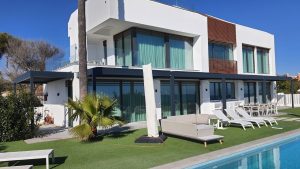
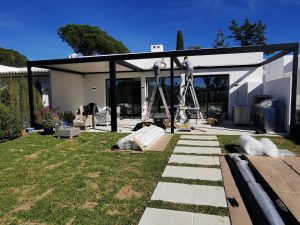
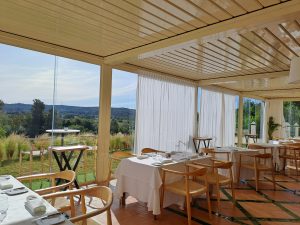
Installing a pergola on the Costa del Sol involves more than choosing an attractive structure or finding the right amount of shade.
In Marbella, Estepona, Mijas, Benalmádena and other coastal areas, wind exposure, proximity to the sea, building height, orientation and installation conditions can all influence which pergola system is suitable for a particular property.
These considerations become especially important for penthouses, elevated terraces, villas overlooking the sea and gardens with limited protection from prevailing winds.
A pergola that works well in a sheltered courtyard may require a different configuration when installed on an exposed rooftop or an open terrace facing the Mediterranean.
The most common mistake is choosing the pergola before understanding the conditions of the space.
In this guide, we examine seven mistakes to avoid, explain the technical and practical considerations behind them and provide further reading to help homeowners, architects, builders and designers plan a more suitable outdoor project.
1. Choosing a Pergola Based on Appearance Alone
Design matters. A pergola should complement the architecture of the property and create an outdoor space that feels comfortable and visually integrated.
However, choosing a structure solely because of its appearance can overlook important technical considerations.
A minimalist pergola with slender profiles, a retractable textile roof or a fixed panelled system may be suitable for one property but require a different assessment in another.
Before selecting a model, consider:
- The orientation of the terrace or garden.
- The building’s height and exposure to wind.
- The dimensions and configuration of the proposed structure.
- The available fixing points.
- The intended use of the space.
- Whether lateral enclosures may be required in the future.
There is no single pergola system that is automatically the best choice for every coastal property.
For an overview of different systems, read our Guide to Bioclimatic Pergolas, Enclosures and Aluminium Louvres.
If you are planning an installation on an elevated terrace, our guide Can Your Terrace Support a Bioclimatic Pergola? explains why the existing structure and fixing conditions need particular attention.
Which Pergola Is Most Resistant to Wind?
There is no single pergola type that is automatically the most wind-resistant in every location.
Wind resistance depends on the selected model, dimensions, roof configuration, fixing system and the exposure of the property. A bioclimatic pergola, fixed panelled roof or retractable system may each be appropriate in different circumstances, provided their technical specifications and installation requirements are suitable.
For exposed penthouses and coastal villas, the most important question is not simply how robust a pergola looks, but whether the complete system — including its fixings and any lateral enclosures — is suitable for the specific site.
Manufacturer specifications, operating limitations and structural feasibility should therefore be considered before selecting a particular design.
2. Underestimating Wind Exposure and Structural Requirements
Wind is one of the most important considerations when planning a pergola in an exposed location.
On the Costa del Sol, local conditions can vary considerably between a sheltered garden, a hillside villa and a penthouse overlooking the sea.
Wind behaviour is influenced by several factors, including building geometry, surrounding structures, height, orientation and the location of the installation.
Consequently, wind resistance should be assessed for the specific pergola model, configuration and installation conditions, rather than assumed from its appearance or the size of its aluminium profiles.
Why stronger profiles are not always the complete answer
Choosing a more robust structure may be appropriate, but structural performance also depends on:
- The design and dimensions of the pergola.
- The number and position of supporting posts.
- The suitability of the fixing system.
- The load-bearing capacity of the supporting structure.
- The arrangement of the roof and any lateral elements.
- The manufacturer’s technical specifications and operating limitations.
A freestanding pergola in a garden may require a different fixing solution from an attached pergola on a reinforced concrete terrace.
On rooftops and elevated terraces, existing waterproofing, structural capacity and the location of suitable anchoring points may impose additional restrictions.
A heavier structure or larger post does not automatically resolve an unsuitable anchoring condition.
Where necessary, structural suitability should be assessed by a qualified professional before proceeding with installation.
For further guidance on elevated installations, see Pergolas for Penthouses on the Costa del Sol.
3. Assuming ZIP Screens or Glass Enclosures Will Automatically Solve Wind Problems
Many homeowners consider lateral enclosures to make a terrace more comfortable during windy or cooler periods.
ZIP screens, sliding glass panels and other enclosure systems can provide valuable protection, improve privacy and extend the practical use of an outdoor area.
However, they also affect how wind interacts with the structure.
An open pergola and a pergola with enclosed sides do not necessarily behave in the same way under wind exposure.
Before specifying lateral protection, it is important to evaluate:
- The prevailing wind direction.
- The height and exposure of the property.
- The type and dimensions of the proposed enclosure.
- The structural capacity and fixing conditions.
- The manufacturer’s operating limits.
- The desired balance between ventilation, protection and openness.
For example, a ZIP screen may be useful for controlling sunlight and improving comfort, but its dimensions and wind-resistance classification must be suitable for the installation.
Similarly, glass enclosures can offer additional protection, but their weight, fixing requirements and effects on wind loading must be considered.
Plan future enclosures from the beginning
Even if you do not intend to install lateral enclosures immediately, it can be useful to discuss that possibility during the initial design.
This may influence the dimensions, fixing points, structural configuration and choice of pergola system.
Our Guide to Bioclimatic Pergolas, Enclosures and Aluminium Louvres explores the main alternatives and the factors to consider.
4. Overlooking Sea Air, Corrosion and Maintenance
Coastal environments can expose outdoor structures to humidity, airborne salt and changing weather conditions.
These factors may accelerate deterioration when materials, finishes or fittings are not appropriate for the environment.
Aluminium is widely used for pergola structures because it combines relatively low weight, design flexibility and good resistance to outdoor conditions.
However, the durability of a coastal pergola depends on more than the fact that its structure is made of aluminium.
Important considerations include:
- The quality and suitability of the coating system.
- The protection of screws, fittings and mechanical components.
- The design of joints and drainage elements.
- Exposure to salt deposits.
- The manufacturer’s maintenance recommendations.
Regular cleaning and appropriate maintenance help preserve the appearance and operation of the pergola, particularly near the sea.
When comparing proposals, it is worth asking not only about the main structure but also about finishes, moving components and maintenance requirements.
For a broader comparison of available solutions, read Bioclimatic Pergola vs Other Pergolas: Which Is Really Worth It?.
5. Requesting a Quote Without Explaining the Property’s Conditions
A common mistake is requesting a pergola quotation using only approximate dimensions and a photograph of a preferred model.
Dimensions are essential, but they rarely provide enough information to understand the complete project.
A useful initial assessment should consider:
| Information | Why it matters |
|---|---|
| Approximate width and projection | Helps identify possible systems and configurations |
| Attached or freestanding installation | Influences structural layout and fixing requirements |
| Property location and type | Provides context for exposure and installation logistics |
| Photographs or plans | Help identify walls, obstacles and potential fixing points |
| Approximate installation height | Relevant to access, exposure and configuration |
| Intended use | Helps determine shade, ventilation and protection needs |
| Future enclosures or accessories | May influence the initial design |
For penthouses or difficult-access properties, lifting equipment, building restrictions and the route for bringing materials to the installation area may also affect feasibility and cost.
A preliminary proposal can often be prepared with the information available, but certain aspects may require a technical visit or additional verification before the project is confirmed.
Read What Should You Know Before Requesting a Quote for a Custom Pergola? for practical guidance.
Need an Initial Assessment of Your Project?
If you are considering a pergola for a villa, garden, terrace or penthouse on the Costa del Sol, our team can review the initial information and help identify suitable alternatives.
You can send us approximate measurements, photographs, plans or renders, together with a brief explanation of how you intend to use the space.
Contact Pérgolas Sunset to discuss your project before choosing a specific model.
6. Copying a Pergola Solution from a Different Property or Climate
A pergola installed in a sheltered garden may look similar to one on an exposed rooftop, but the technical requirements can be very different.
This also applies when comparing projects in different regions of Spain.
On the Costa del Sol, the design may need to pay particular attention to wind exposure, sun orientation, coastal conditions and the use of outdoor spaces throughout much of the year.
In colder inland regions, other factors such as frost, low temperatures, rainfall and possible snow loads may become more relevant.
The lesson is not that one region always requires a stronger pergola than another.
The important point is that each project must respond to its actual location, exposure and intended use.
For properties in inland Spain, our article Cold Climate Pergola Mistakes examines the considerations involved in choosing a pergola for colder conditions.
7. Comparing Pergolas Without Comparing the Complete Project
Two pergolas may appear similar in photographs while differing significantly in their technical characteristics, equipment, configuration and installation requirements.
For example, quotations may vary because of:
- Structural dimensions and profile configurations.
- Roof system and operating mechanism.
- Motorisation and control equipment.
- Integrated drainage solutions.
- Finishes and accessories.
- Lateral protection or future enclosure provisions.
- Installation requirements and site access.
- The scope of supply and professional installation services.
A standardised product supplied for a straightforward installation is not necessarily equivalent to a customised pergola project involving technical assessment, specialised equipment and professional installation.
This does not mean that the most expensive option is automatically the best.
It means that quotations should be compared according to what they actually include and whether the proposed solution is suitable for the property.
Our article Why Do Bioclimatic Pergola Prices Vary So Much? explains the main technical and commercial reasons behind price differences.
You can also consult Pergola Prices in Marbella & Costa del Sol to understand the factors that influence a project budget in this region.
What Architects, Designers and Builders Should Consider
When a pergola forms part of a new-build, renovation or wider outdoor design project, early coordination can help avoid costly modifications.
Professionals should consider:
- Structural feasibility: Verify the suitability of the supporting structure and proposed fixing points.
- Wind exposure: Review the location, height and configuration in relation to the chosen system’s technical specifications.
- Orientation and solar control: Assess how sunlight and prevailing winds affect the intended use of the space.
- Rainwater management: Coordinate pergola drainage with the existing building and terrace drainage.
- Future equipment: Consider lighting, ZIP screens, glass enclosures or other accessories at the design stage.
- Installation logistics: Review access, lifting requirements and the sequence of construction works.
- Architectural integration: Align materials, finishes, dimensions and visual proportions with the property.
Where a standard pergola configuration is not suitable, a bespoke aluminium solution may offer additional design flexibility, subject to technical feasibility.
Our article Custom Aluminium Structures explores this approach.
Further Reading: Plan Your Pergola with Confidence
Choosing a pergola for a coastal property involves several connected decisions. These guides provide more detailed information on specific aspects of the project.
| Your main question | Recommended guide |
|---|---|
| Can my terrace support a pergola? | Can Your Terrace Support a Bioclimatic Pergola? |
| Which roof and enclosure systems should I compare? | Guide to Bioclimatic Pergolas, Enclosures and Aluminium Louvres |
| What should I prepare before requesting a quotation? | Before Requesting a Pergola Quote |
| What influences the price of a pergola? | Pergola Prices in Marbella & Costa del Sol |
| What changes in colder inland regions? | Cold Climate Pergola Mistakes |
These resources are intended to help you assess the complete project, rather than choosing a structure based only on photographs, dimensions or an initial price.
Frequently Asked Questions
Are bioclimatic pergolas suitable for windy areas?
They can be suitable when the selected model, dimensions, fixing system and installation comply with the technical requirements of the location. Wind resistance should be evaluated for the specific project rather than assumed from the pergola type alone.
Does a pergola near the sea require special maintenance?
Coastal exposure may increase the need for cleaning and inspection. Suitable finishes, protected fittings and maintenance according to the manufacturer’s recommendations can help preserve the structure and its components.
Is installing a pergola on a penthouse more complicated?
It can be. Elevated terraces may present additional considerations involving wind exposure, structural capacity, anchoring, waterproofing, access and community regulations. The feasibility of the installation should be assessed before confirming a solution.
Will ZIP screens or glass enclosures make a pergola windproof?
No enclosure should be assumed to make a pergola completely windproof. ZIP screens and glass systems have their own technical characteristics and limitations, and their effects on the complete installation must be considered.
Does a more expensive pergola necessarily resist wind better?
Not necessarily. Price alone does not establish wind resistance or technical suitability. Structural design, manufacturer specifications, installation conditions and the scope of the project are more meaningful factors.
Can I request a preliminary quote without a technical visit?
In many cases, an initial assessment can be made using approximate dimensions, photographs, plans and information about the property. A technical visit or further verification may still be required before confirming the final configuration and installation conditions.
Planning a Pergola for a Wind-Exposed Property on the Costa del Sol?
A pergola should be chosen according to how your outdoor space will actually be used and the conditions it must accommodate.
At Pérgolas Sunset, we help homeowners, architects, builders and designers evaluate pergola solutions for villas, penthouses, gardens and terraces.
Our approach considers the available space, desired functionality, architectural integration and relevant technical and installation requirements.
Contact our team and send us your approximate measurements, photographs or project plans. We can help you explore suitable options before you commit to a particular pergola system.
Spanish version: Errores al elegir una pérgola en zonas de viento y costa.