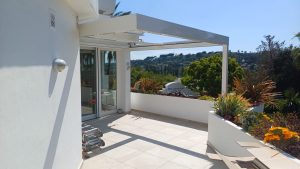
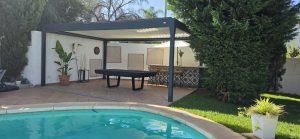
A modern aluminium pergola can complement a traditional country house without compromising its architectural character. The key is to choose the right roof system, proportions, finishes and installation approach.
Whether you own a Mediterranean villa, an Andalusian cortijo or a rural property in Castilla y León, a pergola can create a sheltered dining area, extend an existing porch or introduce a comfortable seating space into the garden.
But rustic properties often present challenges that go beyond appearance.
Stone walls, uneven ground, traditional façades, restricted access and local planning requirements can all influence the project.
At Pérgolas Sunset, we work with bespoke aluminium pergolas designed around the characteristics of each property.
This guide explains which pergola systems suit rustic settings, how to integrate them into traditional architecture and what to check before installation.
Can a Modern Pergola Suit a Rustic Property?
Yes. Contemporary aluminium structures can work alongside natural stone, timber, terracotta, whitewashed façades and traditional landscaping.
A pergola does not need to imitate an old building to complement it.
In many cases, a simple structure with clean lines and understated finishes creates a balanced contrast with the original architecture.
Three considerations are particularly important:
- Proportions: the pergola should complement the building rather than dominate it.
- Finishes: colours and profiles should work with the existing façade and surroundings.
- Positioning: the structure should support the intended use without unnecessarily obstructing windows, views or architectural details.
For example, an attached pergola may create a natural extension of a farmhouse porch.
A freestanding structure, on the other hand, can establish a separate dining or relaxation area within a Mediterranean garden.
The right choice depends on both design preferences and technical feasibility.
Which Pergola System Works Best in a Rustic Setting?
Not every traditional home needs a bioclimatic pergola.
The most suitable roof system depends on sunlight, exposure, the desired level of protection and how the outdoor area will be used.
| Pergola system | When to consider it |
|---|---|
| Bioclimatic pergola | When adjustable shade, daylight and natural ventilation are priorities |
| Fixed-panel pergola | When a permanent overhead roof is preferred |
| Retractable fabric pergola | When flexible shading and a lighter visual appearance are important |
Bioclimatic pergolas: adjustable shade and ventilation
A bioclimatic pergola incorporates adjustable aluminium louvres that help control sunlight and natural airflow.
This can be particularly useful for porches, terraces and gardens where shading needs change throughout the day.
Depending on the selected model, compatible accessories may include integrated lighting, ZIP screens or glass panels.
When closed, the louvres can direct rainwater towards the structure’s drainage system.
However, rain protection should not be confused with complete watertightness. Performance depends on the system, installation and weather conditions.
For a more detailed explanation, read What Is a Bioclimatic Pergola?.
Fixed-panel pergolas: permanent overhead coverage
A fixed-panel pergola may suit a traditional porch, entrance or outdoor dining area where a permanent roof is preferred.
Its appearance will depend on the roof configuration, structural profiles, height and finishes.
It is also important to assess drainage and the effect of the new roof on natural light entering the house.
Retractable fabric pergolas: flexible shading
Retractable fabric systems can be an attractive option for patios and gardens where a lighter-looking roof is preferred.
They allow the covered area to be adjusted according to the system and intended use.
However, fabric performance and operating limitations must be considered, particularly in exposed locations.
Explore alternatives to bioclimatic pergolas in Marbella, Estepona and Mijas for a broader comparison.
How to Integrate a Pergola into Traditional Architecture
Successful integration involves more than selecting the right colour.
Dimensions, height, position and the relationship between the pergola and the existing building all contribute to the final result.
Choose finishes that complement the property
White, anthracite, soft grey and selected earth-inspired tones may work well with traditional architecture.
There is no single colour that suits every rustic home.
A whitewashed Andalusian cortijo, a stone farmhouse and a villa with dark window frames may call for very different finishes.
Respect the building’s proportions
An oversized structure can overwhelm a traditional façade.
Before finalising the design, consider:
- Available height beneath eaves and rooflines.
- The position of doors and windows.
- Views from inside the property.
- The relationship with existing paving and landscaping.
- Movement between indoor and outdoor spaces.
In some situations, a freestanding pergola may integrate more naturally than an attached structure.
Use planting, lighting and furniture thoughtfully
Existing vegetation, planters, warm lighting and appropriately sized outdoor furniture can help connect a modern structure with its surroundings.
The objective is not to add as many decorative features as possible.
It is to create an outdoor area that feels like a natural part of the property.
If you are planning a renovation or new construction, considering the pergola early in the design process can help avoid unnecessary compromises.
Where Can You Install a Pergola in a Rustic Property?
Different outdoor areas present different opportunities and constraints.
Traditional porches and façades
A pergola can extend the usable space immediately outside the home.
Here, particular attention should be paid to daylight, available height, drainage and the suitability of the existing wall for structural fixings.
Courtyards and enclosed patios
In smaller courtyards, a bulky structure can make the space feel darker or more restricted.
A carefully proportioned pergola may provide shade while preserving airflow and the architectural character of the patio.
Mediterranean gardens and pool areas
A pergola can create a separate dining or relaxation area beside a pool or within a landscaped garden.
Its position should take account of sunlight, circulation, views and existing planting.
For more ideas, explore how to design an outdoor space around your pool and garden.
Cortijos and country houses
Rural properties may have uneven ground, traditional masonry, older paving or restricted access routes.
These conditions should be assessed before choosing the pergola configuration.
Local planning restrictions may also be particularly relevant.
Planning a Pergola for a Country House or Rustic Villa?
Every traditional property presents different design and installation requirements.
Photographs of the proposed area, approximate dimensions and the property’s location can help us understand which aluminium pergola systems may be worth considering.
At Pérgolas Sunset, we can help you explore options for porches, courtyards, gardens and traditional homes.
Contact our team to discuss your pergola project.
What Should You Check Before Installation?
A pergola should not only look appropriate.
Its structure, foundations, drainage and installation method must also suit the property.
Ground conditions and structural fixings
Natural stone, old paving or an existing terrace should not automatically be assumed suitable for supporting a pergola.
The proposed fixing method must be assessed according to the structure, dimensions and expected loads.
For attached pergolas, the condition and suitability of the supporting wall are also important.
Rainwater drainage
A roof requires an appropriate drainage solution.
On traditional properties, particular care may be needed to avoid directing rainwater towards vulnerable masonry, poorly drained courtyards or areas where moisture could accumulate.
Delivery and installation access
Some rural homes have narrow entrances, uneven access roads or limited unloading space.
These constraints can affect transport, installation planning and the potential need for lifting equipment.
Planning permission and rural land
Owning the land does not automatically mean that a pergola can be installed without planning checks.
Requirements vary according to the municipality, the characteristics of the proposed structure, the classification of the land and any protection affecting the building.
For traditional properties and homes on rural land, these considerations may be especially important.
Relevant local requirements should be checked before proceeding.
Costa del Sol and Castilla y León: Different Climatic Considerations
The same architectural approach may work in different regions, but the technical requirements can vary.
On the Costa del Sol, strong sunlight, coastal humidity, salt exposure and wind may influence the selection and positioning of the pergola.
In Castilla y León, frost, winter temperatures, wind and potential snow loads may require additional consideration.
These factors can affect the roof system, structure, anchoring and accessories.
For colder inland locations, see Pergola Mistakes in Cold Climates: How to Enjoy Your Outdoor Space in Autumn and Winter.
Can Glass Panels or ZIP Screens Be Added Later?
Some aluminium pergola systems allow compatible glass enclosures, ZIP screens or other accessories to be incorporated.
These can help manage lateral wind exposure, sunlight and privacy.
However, not every pergola can accommodate every enclosure.
If you are considering enclosing part of the space in the future, it is worth discussing this during the initial design.
Dimensions, fixing points, drainage and electrical requirements may all affect the options available.
It is also important to remember that adding glass or screens does not automatically transform an outdoor pergola into a fully insulated or climate-controlled room.
Learn more in our guide to bioclimatic pergolas and enclosures.
Checklist: Choosing a Pergola for a Rustic Home
Before requesting a proposal, consider the following questions:
- What will the space be used for: dining, relaxation, shade or circulation?
- Should the pergola be attached or freestanding?
- What are the approximate dimensions?
- Which colours and finishes suit the existing architecture?
- How do sunlight and wind affect the area?
- Are the ground and fixing points suitable?
- Where will rainwater drain?
- Are there any access restrictions?
- Might glass panels or ZIP screens be added later?
- Have the relevant planning requirements been checked?
You do not need every answer before making an initial enquiry.
However, this information can help identify which solutions deserve further consideration.
Frequently Asked Questions About Pergolas in Rustic Settings
What type of pergola looks best on a rustic house?
It depends on the architecture, dimensions and intended use. A contemporary aluminium pergola with balanced proportions and understated finishes can complement both stone-built properties and whitewashed country houses.
Can aluminium pergolas work alongside stone and timber?
Yes. Aluminium profiles can be visually integrated with traditional materials. The final result depends on positioning, colour, dimensions and the relationship with the existing building.
Is a bioclimatic or fixed-panel pergola better for a traditional porch?
A bioclimatic pergola allows adjustable shade and ventilation through movable louvres. A fixed-panel system provides a permanent roof. The right choice depends on the desired protection, orientation and technical requirements.
Can I install a pergola on a rural property?
Potentially, but feasibility depends on the applicable planning regulations, the property and the proposed installation. These conditions should be checked before proceeding.
Can I add glass panels or ZIP screens later?
Some systems allow compatible accessories to be added after installation. Planning for them from the beginning is advisable because structural and dimensional requirements may limit future options.
What information does Pérgolas Sunset need to assess my project?
The location, approximate measurements, photographs of the proposed area and supporting surfaces, intended use and design preferences. Information about access restrictions and future enclosure plans is also useful.
A Pergola Should Complement Your Rustic Home, Not Compete with It
Installing a pergola in a country house, cortijo or traditional garden is about finding the right balance between architecture, outdoor comfort and technical feasibility.
A bespoke aluminium structure can provide shade, improve the practical use of outdoor space and complement traditional materials without having to imitate them.
At Pérgolas Sunset, we help homeowners explore bioclimatic, fixed-panel and other aluminium pergola solutions for properties on the Costa del Sol and in Castilla y León.
Contact Pérgolas Sunset and share your project’s location, approximate dimensions and photographs so we can assess suitable alternatives.
You can also explore our pergola catalogue and gallery of completed projects.
Spanish version: Pérgolas para ambientes rústicos: cómo integrarlas en casas de campo, cortijos y jardines