
A bioclimatic pergola is an outdoor structure, typically made from aluminium, with adjustable roof louvres that help control sunlight, shade and natural ventilation.
Unlike a fixed roof, its louvres can change position to adapt the covered space to different times of day and weather conditions.
However, not all bioclimatic pergolas offer the same performance. The construction of the louvres, structural profiles, motorisation, drainage and installation all influence how the system works.
This guide explains what a bioclimatic pergola is, how it works, its advantages and limitations, and what to consider before choosing one.
It also serves as a reference point for our specialist guides on pergola prices, roof systems, enclosures and residential projects on the Costa del Sol and in Castilla y León.
1. How Does a Bioclimatic Pergola Work?
The main feature of a bioclimatic pergola is its adjustable roof.
The louvres rotate to regulate the relationship between sunlight, shade and airflow.
Open louvres
When the louvres are open, more daylight can enter the covered area and air can circulate through the roof.
This may help reduce heat accumulation beneath the structure, depending on the surrounding conditions.
Partially adjusted louvres
The louvres can be positioned to create shade while allowing some daylight and ventilation.
This flexibility is particularly useful for outdoor dining areas, terraces and garden seating spaces.
Closed louvres
When closed, the louvres reduce direct sunlight and, in systems designed for rain protection, channel water towards the drainage system.
Nevertheless, a bioclimatic pergola should not be described as completely waterproof under every weather condition.
Wind-driven rain, installation conditions and the specifications of the system can affect its performance.
2. Louvre Design and Thermal Comfort: Why the Air Chamber Matters
One of the most important technical differences between bioclimatic pergolas is the construction of their aluminium louvres.
Some systems use hollow-profile louvres containing internal air chambers.
These chambers can contribute to reducing heat transfer through the louvre compared with certain single-wall designs.
The air contained within the profile forms part of its thermal resistance, although the actual effect depends on the geometry, materials, wall thickness and exposure conditions.
Does an air chamber make the pergola cooler?
It can contribute to the thermal behaviour of the roof, but it does not guarantee a particular temperature underneath.
Outdoor comfort depends on several factors working together:
- Louvre orientation: controlling direct solar radiation and shade.
- Natural ventilation: allowing warm air to escape through the roof.
- Louvre construction: influencing heat transfer through the aluminium profiles.
- Colour and finish: affecting solar radiation absorption.
- Pergola orientation: determining exposure throughout the day.
- Surrounding conditions: including wind, nearby walls, paving and vegetation.
This distinction is especially relevant in sunny locations such as Marbella, Estepona and Mijas.
When comparing two apparently similar pergolas, it is worth asking how their louvres are constructed and whether the manufacturer provides technical information about their thermal performance.
A bioclimatic pergola is not defined simply by having rotating louvres. The design and performance of the complete system also matter.
Can the Air Chamber Be Filled with Insulating Foam?
Some homeowners enquire about bioclimatic pergola louvres with insulating foam inside their internal air chambers, seeking to further reduce heat transfer through the roof.
Depending on the manufacturer’s design, certain louvres may incorporate a suitable insulating foam within their hollow profiles.
This can help limit heat transfer between the outer and inner surfaces of the louvre, particularly when the aluminium roof is exposed to strong sunlight.
However, the actual thermal improvement depends on the insulation material, the geometry of the aluminium profile and the manufacturer’s technical specifications.
Foam-filled louvres should not automatically be considered superior to every air-chamber design. Their performance should be assessed using comparable technical information.
It is also important to distinguish the thermal behaviour of an individual louvre from the overall comfort beneath the pergola. Solar exposure, natural ventilation, orientation and surrounding conditions remain essential factors.
Where available, this feature should be considered as part of the complete roof system rather than as an isolated upgrade.
3. What Are the Main Components of a Bioclimatic Pergola?
Aluminium structure
The beams, supporting posts and connections form the structural framework.
Their dimensions, design and fixing conditions must be appropriate for the proposed installation.
At Pérgolas Sunset, we work with lacquered aluminium structures in different configurations, subject to each model’s technical limitations.
Motorisation
Motorised systems allow users to adjust the roof louvres using compatible controls.
Motorisation should not be confused with automation.
A motorised pergola does not necessarily include weather sensors, smartphone control or home-automation integration.
These features depend on the model and available accessories.
Integrated drainage
In systems designed to manage rainfall, water is collected through channels and directed towards suitable discharge points.
Depending on the structure, drainage may be integrated into the supporting posts.
The drainage arrangement must be considered in relation to the property’s existing surfaces and water outlets.
Optional accessories
Depending on the model, a pergola may accommodate:
- Integrated LED lighting.
- Compatible weather sensors.
- Vertical ZIP screens.
- Glass enclosures.
- Suitable outdoor heating systems.
- Other compatible accessories.
Not every accessory is available for every structure, and compatibility should be checked before installation.
4. What Types of Bioclimatic Pergolas Are Available?
Adjustable-louvre pergolas
The louvres rotate but remain distributed across the roof.
This configuration allows the user to regulate sunlight and ventilation without retracting the roof.
Adjustable and retractable-louvre pergolas
Some systems allow the louvres to rotate and move aside, opening a larger portion of the roof.
Their suitability depends on the mechanism, structural configuration, dimensions and site conditions.
Wall-attached pergolas
A wall-attached pergola connects to a suitable part of the building.
It may be considered for terraces, patios and outdoor areas adjacent to living rooms or kitchens.
The condition of the façade and proposed fixing points must be assessed.
Freestanding pergolas
A freestanding pergola is supported by its own posts.
This configuration can be useful in gardens, poolside areas and other spaces where the structure is not intended to connect directly to the house.
The appropriate configuration depends on the architecture, available supports and intended use.
5. What Are the Advantages and Limitations?
| Potential advantages | What to consider |
|---|---|
| Adjustable sunlight and shade | Orientation influences the result |
| Natural ventilation | It is not an air-conditioning system |
| Motorised operation | Controls and automation vary by model |
| Integrated rainwater drainage | Complete watertightness cannot be assumed |
| Architectural integration | Dimensions and fixings require assessment |
| Compatible lighting and enclosures | Future additions are not always possible |
A bioclimatic pergola can improve the usability of an outdoor area, but its suitability depends on the property and how the space will be used.
6. When Is a Bioclimatic Pergola Worth Choosing?
A bioclimatic pergola may be particularly attractive when you want to:
- Adjust shade throughout the day.
- Combine sunlight control with natural ventilation.
- Create an outdoor dining or seating area.
- Integrate compatible lighting and accessories.
- Connect indoor and outdoor living spaces.
- Plan for potential future side protection.
However, it is not always the most suitable option.
If you primarily need a permanently closed roof, a fixed panelled pergola may deserve consideration.
If you want a different opening mechanism, a retractable textile system may be more appropriate.
For a more detailed decision-making guide, explore:
- Advantages of a Bioclimatic Pergola Compared with Other Outdoor Roof Systems
- Affordable Alternatives to Bioclimatic Pergolas in Marbella, Estepona and Mijas
These articles address different questions: what bioclimatic systems offer and when another roof solution may be more appropriate.
7. Can You Enclose a Bioclimatic Pergola?
Certain pergola models can accommodate compatible glass systems or vertical ZIP screens.
These additions may help manage lateral sunlight, privacy and some wind exposure.
However, adding side enclosures does not automatically transform a pergola into an insulated interior room.
Structural capacity, dimensions, fixing points and compatibility must be considered.
If you may want to enclose the space in the future, discuss this during the initial planning stage.
You can learn more in our Guide to Bioclimatic Pergolas and Enclosures.
8. How Much Does a Bioclimatic Pergola Cost?
There is no single price that accurately represents every bioclimatic pergola project.
The final quotation may depend on:
- Dimensions and number of modules.
- Structural design and aluminium profiles.
- Louvre construction and roof mechanism.
- Motorisation and compatible accessories.
- Finishes and coatings.
- Transportation and installation.
- Access restrictions and lifting requirements.
- Site-specific technical considerations.
Two pergolas with similar dimensions can differ significantly in design, specifications and installation scope.
For further guidance, explore our specialist articles:
Pergola Prices in Marbella and the Costa del Sol explains the factors that influence the overall project budget.
Why Are There Such Big Price Differences in Bioclimatic Pergolas? examines why apparently similar products may have different prices.
How to Compare Pergola Quotes on the Costa del Sol helps homeowners understand what to check when evaluating proposals.
The aim is not simply to find the lowest figure, but to understand what each quotation includes.
9. Where Can You Install a Bioclimatic Pergola?
Villas and detached houses
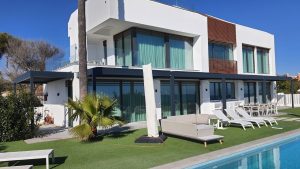
A pergola may connect an indoor living area with an outdoor dining space, garden or poolside terrace.
Read Pergolas for Villas: How to Plan Outdoor Spaces Around Your Home.
Penthouses and roof terraces
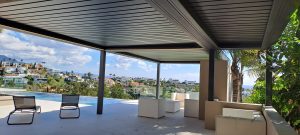
Wind exposure, fixing points, access and community requirements can be particularly important in elevated locations.
Explore our guide to pergolas for penthouses on the Costa del Sol.
Gardens and swimming pools
A pergola can help define dining, lounging and shaded relaxation areas around a swimming pool.
See How to Design an Outdoor Space Around Your Pool and Garden.
Driveways and home entrances
A bioclimatic pergola is not necessarily the best system for covering a vehicle.
Depending on the requirements, a fixed panelled roof may be more suitable.
Our article Pergola for Driveway, Carport or Home Entrance explains what to consider.
Hospitality and commercial terraces
Outdoor dining and hospitality projects involve specific questions about customer circulation, usable space, exposure and operating requirements.
The chosen pergola system should respond to the business’s intended use and installation conditions.
10. What Should You Check Before Installation?
Before choosing a model, review the following points:
- Intended use: dining, relaxation, hospitality or another purpose.
- Dimensions: available width, depth and height.
- Orientation: sunlight exposure throughout the day.
- Wind: the actual exposure of the property.
- Structure: walls, foundations and potential fixing points.
- Drainage: where collected water will be discharged.
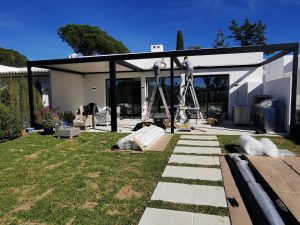
- Access: delivery, assembly and any lifting requirements.
- Permissions: applicable municipal or community rules.
- Accessories: lighting, sensors and compatible enclosures.
- Future plans: changes in use or possible side protection.
A pergola planned for a new-build property may involve different considerations from one installed at an existing home.
The same applies when a pergola is incorporated into a broader architectural or landscaping project.
Planning a Bioclimatic Pergola?
At Pérgolas Sunset, we assess the intended use, location and technical requirements before recommending a roof system.
A bioclimatic pergola may be suitable, but a fixed panelled or retractable solution could sometimes better match the project.
Contact our team with photographs, approximate dimensions, your property’s location and a description of how you would like to use the space.
We can discuss the available options and the technical checks required for an initial proposal.
11. Further Reading: Your Bioclimatic Pergola Resource Library
Once you understand the fundamentals, you can explore the topic most relevant to your project.
| Your question | Recommended guide |
|---|---|
| How does a bioclimatic pergola compare with other roofs? | Bioclimatic Pergolas vs Other Roof Systems |
| What alternatives should I consider? | Alternatives to Bioclimatic Pergolas |
| What influences the price? | Pergola Prices in Marbella |
| Why do similar pergolas have different prices? | Understanding Price Differences |
| How should I compare quotations? | Comparing Pergola Quotes |
| Can I add glass or ZIP screens? | Pergolas and Enclosures |
| How can a pergola fit my villa? | Planning Pergolas for Villas |
| What about exposed roof terraces? | Pergolas for Penthouses |
These guides explore specific decisions in greater detail, without requiring this introductory article to repeat every aspect of pergola design and installation.
Frequently Asked Questions About Bioclimatic Pergolas
What makes a pergola bioclimatic?
Its adjustable roof louvres allow users to regulate sunlight, shade and natural ventilation. Performance depends on the complete system, not just the louvres.
Are bioclimatic pergolas waterproof?
Systems designed for rainfall can collect and drain water, but complete watertightness under all conditions should not be assumed.
Do all bioclimatic louvres contain air chambers?
No. Louvre construction varies between manufacturers and models. Some hollow aluminium profiles incorporate air chambers that can influence thermal behaviour.
Can a bioclimatic pergola reduce heat?
It can reduce direct solar exposure and allow natural ventilation. Certain louvre designs may also moderate heat transfer through the roof. The actual temperature depends on environmental conditions and the installation.
Do bioclimatic pergolas need motorisation?
Motorised operation is common and convenient. Available control systems and automation features depend on the model.
Can a bioclimatic pergola withstand strong winds?
Wind resistance depends on the structure, dimensions, anchoring, installation and manufacturer’s specifications. The site must be assessed individually.
Can I install one on a penthouse terrace?
Potentially, subject to structural feasibility, wind exposure, access, fixings and any applicable permissions.
Can glass enclosures or ZIP screens be added later?
Only when compatible with the structure and technically feasible. Future enclosure plans should ideally be discussed before installation.
Is a bioclimatic pergola better than a fixed panelled roof?
Not necessarily. A bioclimatic system provides adjustable sunlight and ventilation, while a fixed roof may be more appropriate for permanent overhead coverage.
What information do I need to request a quotation?
Your property’s location, approximate dimensions, photographs, intended use and preferred accessories. Plans or drawings can also be useful.
Conclusion: Understand the System Before Choosing
A bioclimatic pergola can help transform an outdoor area by regulating sunlight, shade and natural ventilation.
But choosing the right system involves more than selecting adjustable louvres.
The construction of the roof, including possible internal air chambers, structural design, drainage, motorisation, installation and future requirements all deserve attention.
That is why this guide brings together the fundamentals and connects them with our more detailed resources.
At Pérgolas Sunset, we work with aluminium pergola systems for residential and outdoor projects, with our own installation teams operating in our service areas in Andalusia and Castilla y León.
Request an initial project assessment to explore which pergola solution may be appropriate for your property.
Este artículo también está disponible en español: ¿Qué es una pérgola bioclimática y cómo funciona?.


6 Comentario
[…] What is a bioclimatic pergola? – Learn the fundamentals of bioclimatic pergolas and how they control light and ventilation. […]
[…] buyer. If you’re new to the concept of bioclimatic pergolas, we recommend reading our guide What Is a Bioclimatic Pergola? first to understand how they work and why they’re so […]
[…] and winter? Here we explain the keys to enjoying your pergola all year round and highlight when a bioclimatic pergola with orientable louvers is worth the […]
[…] to basic timber pergolas, aluminium will not warp or rot. It also integrates seamlessly with bioclimatic pergolas, giving you complete control over light, shade and ventilation. To explore how bioclimatic systems […]
[…] On roof terraces exposed to strong winds, lightweight fabrics or glass roofs can act like sails. Bioclimatic pergolas with adjustable slats allow you to regulate light and airflow while offering greater structural […]
[…] this first stage, it is normal for the client not to know whether they need a bioclimatic pergola, a fixed roof, a custom-made aluminium structure, a panelled pergola, a retractable solution, a […]
¡Los comentarios están cerrados para este artículo!